Great Powers
Elections in the Shadow of War: Russia's First Parliamentary Vote Since the Invasion
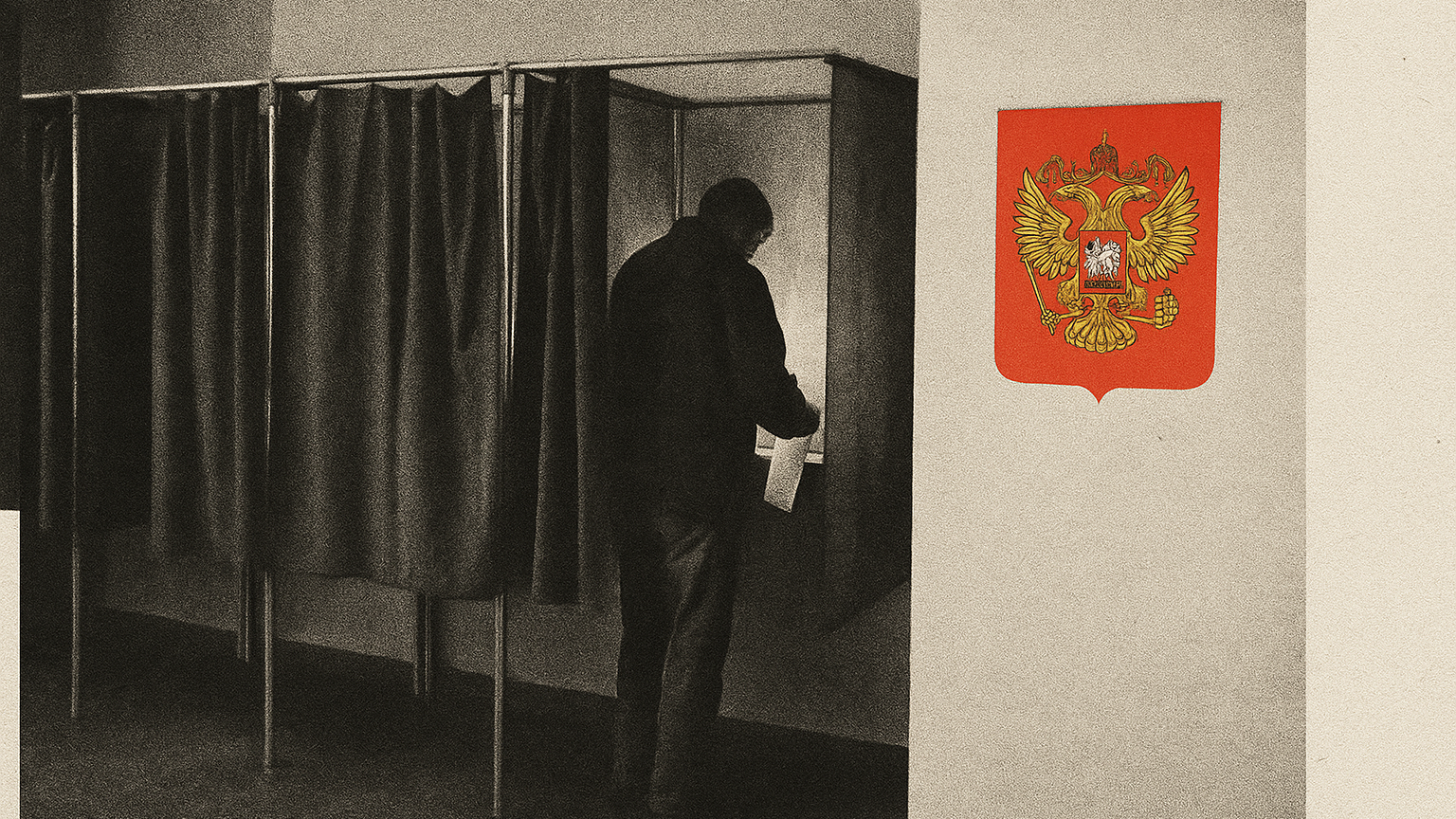
Russia's State Duma election, held from September 18 to 20, 2026, might appear as a routine political event at first glance. However, it raises questions about whether this election serves as a mechanism to institutionalize and justify the full-scale war as the 'will of the people.'
This election is symbolic as it is the first State Duma election since Russia's full-scale invasion in 2022. Held amid a prolonged war, it questions the meaning of elections within a political system where war has become normalized. It prompts the inquiry of whether this is merely a political event in the guise of an election or a mechanism to institutionalize and justify the war.
In reality, this election is being used by Russia as a means to strengthen 'integration' with the occupied territories of Ukraine. For the first time, State Duma constituencies were established in occupied regions such as Donetsk, Luhansk, Zaporizhzhia, and Kherson, allowing residents to send representatives to the federal parliament. This process institutionalizes a sequence of 'occupation → passportization → forced voting → annexation declaration → federal representation,' serving as a strategic tool to reinforce the political legitimacy of the war.
As an institutional mechanism of justification, the election aims to frame the war as a 'choice of the people.' The Kremlin uses the election to showcase public support for the war and to secure a 'legitimate reason' to continue it. In this election, many veterans who participated in the war ran as candidates, and campaigns emphasized 'victory for the war.'
Yet, doubts remain about whether this election truly reflects public opinion or if it is a controlled political performance. Anti-war parties like Yabloko have already been excluded from the election, and independent election monitoring has virtually disappeared. Although the election was held, political diversity and competition were thoroughly suppressed.
Can such a controlled election truly function as a means of conferring 'political legitimacy'? While the Kremlin may claim to have secured public support for the war through the election, in reality, public dissatisfaction is growing amid war fatigue and economic hardship. Polls indicate that the rally-around-the-flag effect is gradually fading, and the rise in support for Yabloko reflects this.
Nevertheless, the Kremlin continues its attempts to reinforce the legitimacy of the war through the election. The predictability of the election results demonstrates how meticulously this system is designed. The election serves as political cover to continue the war, presented externally as a 'democratic process,' but internally functioning as a tool for maintaining power and justifying the war.
This election is just one scene in the institutionalization of war. As war permeates the political system, elections have transformed from a mechanism for gauging public will into a tool for political legitimacy to sustain the war. As such elections are repeated, war will solidify as both a political and institutional reality. Readers are encouraged to continue questioning how war seeps into institutions and how these institutions justify the war.
This article was produced with the assistance of AI using publicly available sources and has undergone The Gist’s factual and source-verification process. Original sources are listed below. Errors and corrections: corrections@thegist.co.kr
Sources
- S1 — Robert Lansing Institute2026-09-17 · accessed 2026-09-19
- S2 — AP News2026-09-16 · accessed 2026-09-19
- S3 — AP News2026-09-17 · accessed 2026-09-19
- S4 — Le Monde2026-08-20 · accessed 2026-09-19
- S5 — World Politics Review2026-09-18 · accessed 2026-09-19
- S6 — Free Russia Foundation2026-07-23 · accessed 2026-09-19
- S7 — Le Monde2026-07-21 · accessed 2026-09-19
- S8 — The Washington Post2026-09-19 · accessed 2026-09-19
- S9 — Kyiv Post2026-09-18 · accessed 2026-09-19
- S10 — hromadske· accessed 2026-09-19