Security
The Human Cost of Russia's Zaporizhzhia Strikes
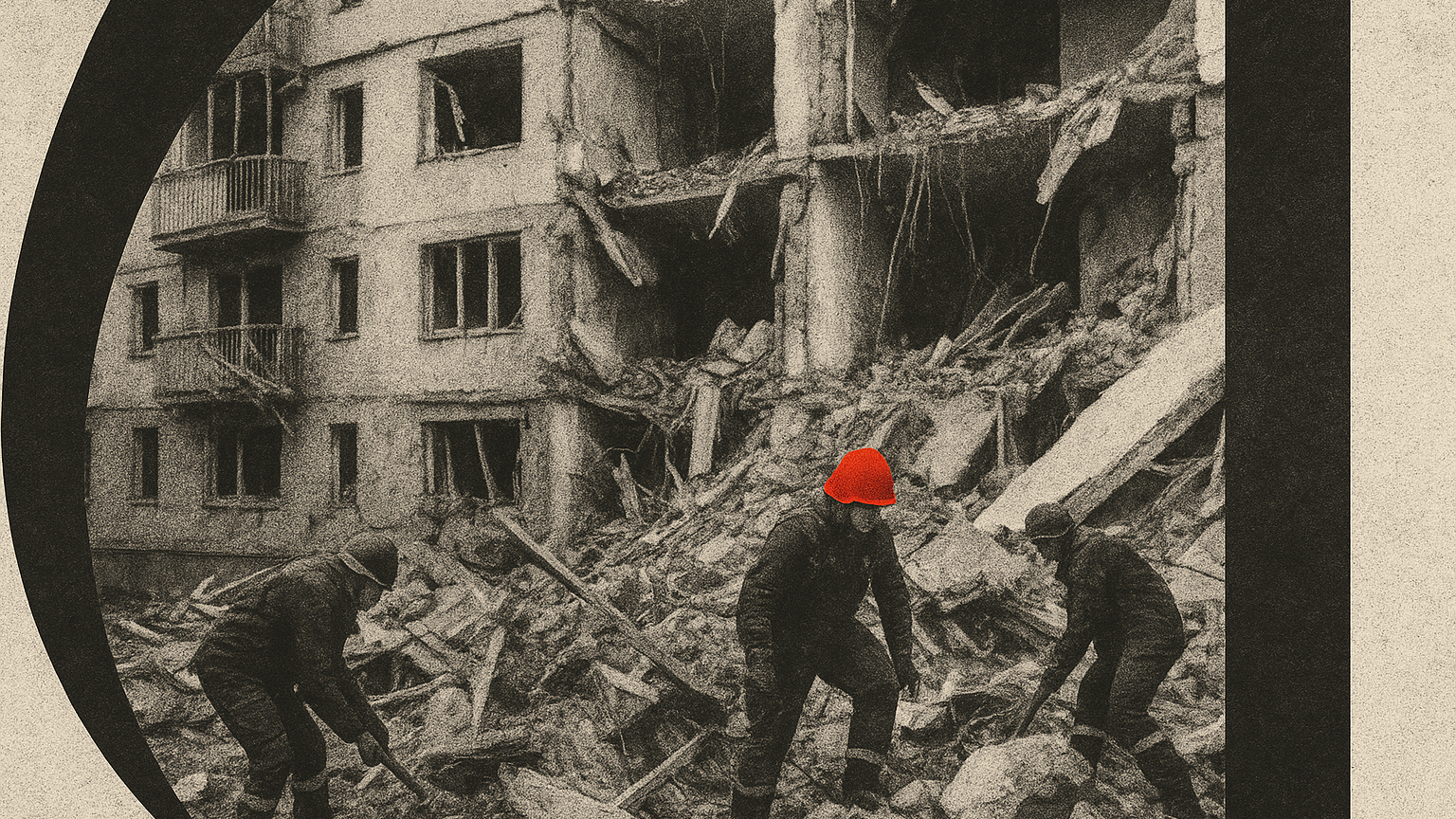
On October 10, a Russian guided strike in Zaporizhzhia claimed at least 20 lives, including three children. This incident reveals a structural reality where civilian lives are often dismissed as 'collateral damage' in war. Why is Zaporizhzhia repeatedly targeted, and what measures does the international community have in place to prevent such attacks? These questions lead to a fundamental reflection on the ethics of war and the effectiveness of international law.
Zaporizhzhia's repeated targeting by Russia is rooted in its strategic importance. Situated along the Dnipro River, this city serves as a transportation and industrial hub in southern Ukraine and holds military and economic significance as a link to Crimea. This strategic value results in the physical proximity of civilian residences to military targets, leading to frequent civilian casualties.
Since Russia's full-scale invasion in February 2022, Zaporizhzhia has become a primary target for long-range missiles, drones, and cruise missiles. An attack in October 2022 alone resulted in 13 deaths and 89 injuries, with similar assaults following. These repeated attacks on civilian areas reflect not mere 'misfires' but the reality of a battlefield where strategic objectives and civilian spaces are intertwined.
In May 2026, a Kh-101 cruise missile struck a residential area in Zaporizhzhia, killing 12 people, including two children, and injuring 43. The repeated civilian casualties despite the use of precision weapons highlight the deep infiltration of military objectives into civilian spaces. In such blurred battlefields, the pretext of 'precision strikes' becomes a means to justify civilian harm.
Testimonies from local residents further illuminate this structural issue. One resident noted, "Soldiers were living right next to our apartment." In a frontline city where military infrastructure and civilian housing are mixed, civilian casualties become inevitable when the targets are unclear. This shows how easily civilian lives are sacrificed in the 'flow' of war.
The international community has established various norms to protect civilians. For instance, the UN Office of the High Commissioner for Human Rights (OHCHR) highlighted in a 2024 report that long-range missile and airstrikes are major causes of child casualties. The inadequate protection of civilians in cities like Zaporizhzhia demonstrates that international law remains largely declarative.
International law demands the distinction between military and civilian targets and adherence to the principle of proportionality. However, in reality, the technological pretext of 'precision-guided weapons' often serves to obscure civilian harm. In environments where civilian and military targets are intermingled, the criteria for judging the legitimacy of attacks become ambiguous.
To overcome these limitations, international responses must be strengthened both technically and politically. Measures such as establishing 'safe zones' for civilians, warning systems before attacks, and independent investigations and accountability after attacks are necessary. Yet, these mechanisms remain largely declarative, lacking effective enforcement.
In the October 10 attack, rescue teams are struggling to find survivors amid the rubble of collapsed buildings. In addition to the deceased, there are seriously injured and missing persons, and the full extent of the damage will become clearer over time. Civilian lives are recorded merely as 'statistics' of war, while their suffering continues on the ground.
When we consume this tragedy as mere news, civilian suffering becomes just another 'routine'. However, this incident should lead to questions about the ethics of war, the effectiveness of international law, and how war structurally threatens civilian lives. The tragedy in Zaporizhzhia leaves us with questions we must continue to ask even after the war ends.
This article was produced with the assistance of AI using publicly available sources and has undergone The Gist’s factual and source-verification process. Original sources are listed below. Errors and corrections: corrections@thegist.co.kr
Sources
- S1 — dw.com· accessed 2026-10-10
- S2 — Deutsche Welle2026-10-10 · accessed 2026-10-10
- S3 — Wikipedia2026-02-01 · accessed 2026-10-10
- S4 — UkraineWorld2026-02-01 · accessed 2026-10-10
- S5 — Kyiv Independent2026-09-27 · accessed 2026-10-10
- S6 — OHCHR2025-03-21 · accessed 2026-10-10