Politics
Between 'Show Your Face' and 'Limits of Integration': Questions Raised by Meloni's School Policies
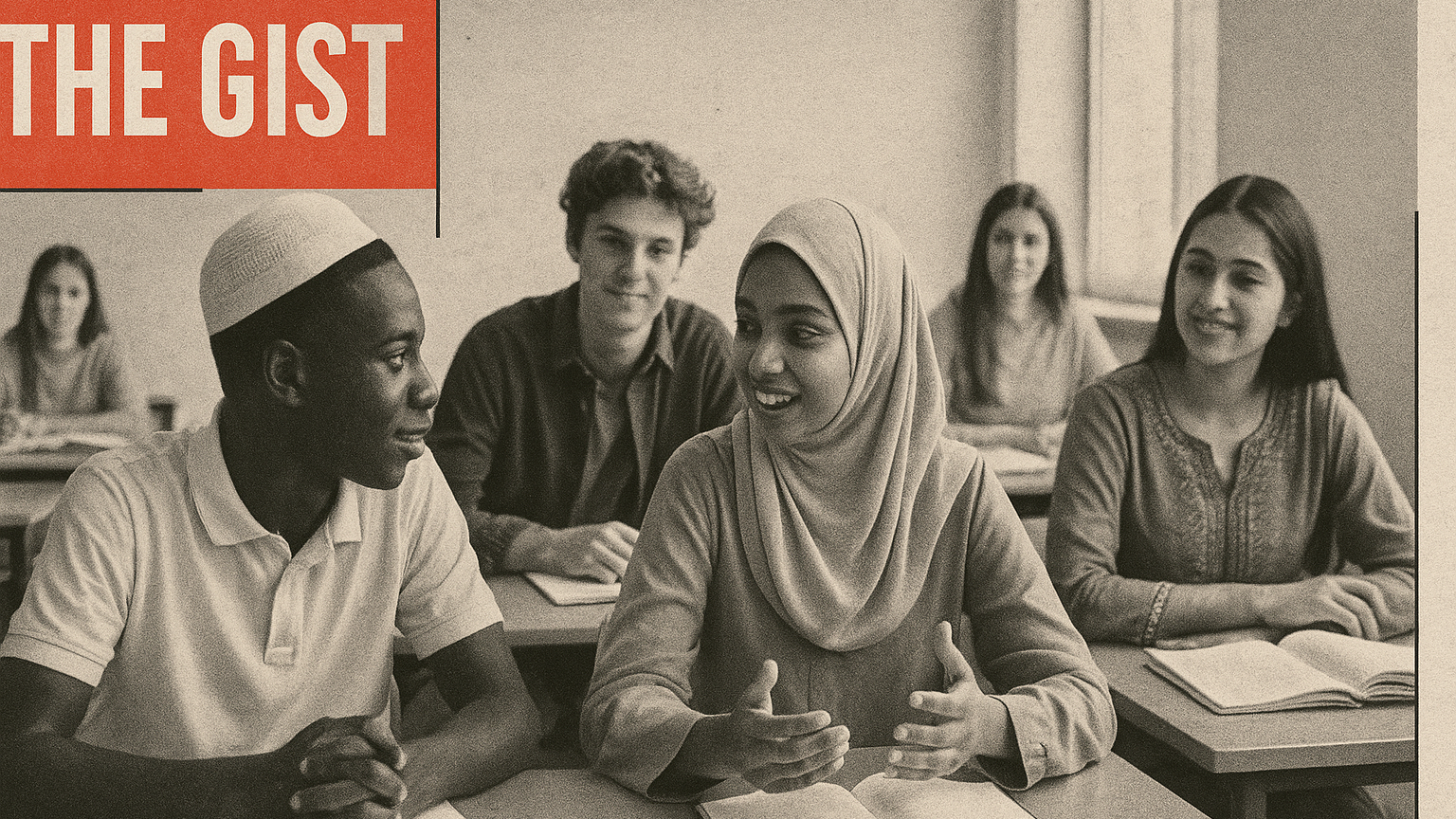
Italian Prime Minister Giorgia Meloni's announcement to ban burqas and niqabs in schools and legally cap the percentage of foreign students raises the question: Do regulations for integration truly foster unity? This issue tests the foundations of social trust and multicultural coexistence beyond mere policy effects.
On September 20, 2026, Prime Minister Meloni announced at a right-wing youth organization event that measures would soon be presented to the cabinet. These include banning burqas and niqabs in schools, setting a legal cap on the number of foreign students, and mandating Italian language learning for parents of foreign students struggling with integration. She emphasized, "In Italy, one cannot attend school with a covered face," and stated, "Italian children must not become minorities and outsiders."
At first glance, these measures appear to be a 'restoration of order' for integration. However, since 2010, Italy's education ministry has recommended that foreign students should not exceed 30% of a class. While Meloni intends to legislate this cap, the actual impact remains unclear. In regions with high percentages of foreign students, the policy's feasibility is questionable, raising doubts about its effectiveness.
Foreign students make up only about 11.6% of Italy's total student population, but regional disparities are significant. In some northern areas, schools have over 30-40% foreign students. Applying a uniform legal cap could be seen as ignoring educational equity and regional realities.
Does Integration Open the Door to Exclusion?
The ban on burqas and niqabs, another facet of the policy, is framed as promoting women's equality and national identity. However, it can be interpreted as targeting minority religious expressions. Italy already has a 1975 law banning attire that hinders identification, and a 2008 ruling allows face coverings for religious reasons but requires removal for identification. Meloni's measures seem to reinforce existing legal frameworks but may clash with religious expression freedoms.
Looking at other European examples, France banned Islamic veils in public schools, and the European Court of Human Rights recognized this as aligning with the social value of 'living together.' Yet, the impact of such policies on minority women's educational participation and autonomy remains contentious.
Voices from the educational field highlight practical challenges. The principals' association points out the technical difficulties of enforcing the legal cap, while the opposition criticizes the measures as ideological propaganda that ignores real educational issues like budget shortages, poor facilities, and teacher scarcity.
The Political Context and Electoral Strategy of the Policy
These measures extend beyond mere educational policy, serving as a political strategy ahead of the 2027 general election. Meloni aims to reinforce her right-wing identity and counter the rise of the more extreme right-wing party, 'National Future Party (FN),' which has been advocating for a school burqa ban since July.
Policies that function more as political messages than practical help for schools risk fostering division under the guise of integration. In multicultural societies, the command to 'show your face' can be perceived as a signal to suppress identity freedom.
If the goal is integration, the approach should focus on improving education quality and reducing language and cultural barriers. Language and cultural support for parents and students, teacher training, and region-specific integration programs could be more effective alternatives. However, Meloni's government emphasizes 'control' and 'boundary setting' over these directions.
Can the command to show one's face be the start of integration, or does it create another boundary between 'us' and 'them'? This question extends beyond Italy's educational policy, probing how multicultural societies will coexist in the future.
This article was produced with the assistance of AI using publicly available sources and has undergone The Gist’s factual and source-verification process. Original sources are listed below. Errors and corrections: corrections@thegist.co.kr
Sources
- S1 — Al Jazeera· accessed 2026-09-25
- S2 — Al Jazeera2026-09-20 · accessed 2026-09-25
- S3 — Investing.com (Reuters)2026-09-20 · accessed 2026-09-25
- S4 — The Local2026-09-22 · accessed 2026-09-25
- S5 — Sky TG242026-09-25 · accessed 2026-09-25
- S6 — ANSA (English Service)2026-09-21 · accessed 2026-09-25
- S7 — Wikipedia2026-05-01 · accessed 2026-09-25
- S8 — HNGN2026-09-21 · accessed 2026-09-25