Society
The Day the Ice Wall Collapsed: Unraveling the Himalayan Disaster
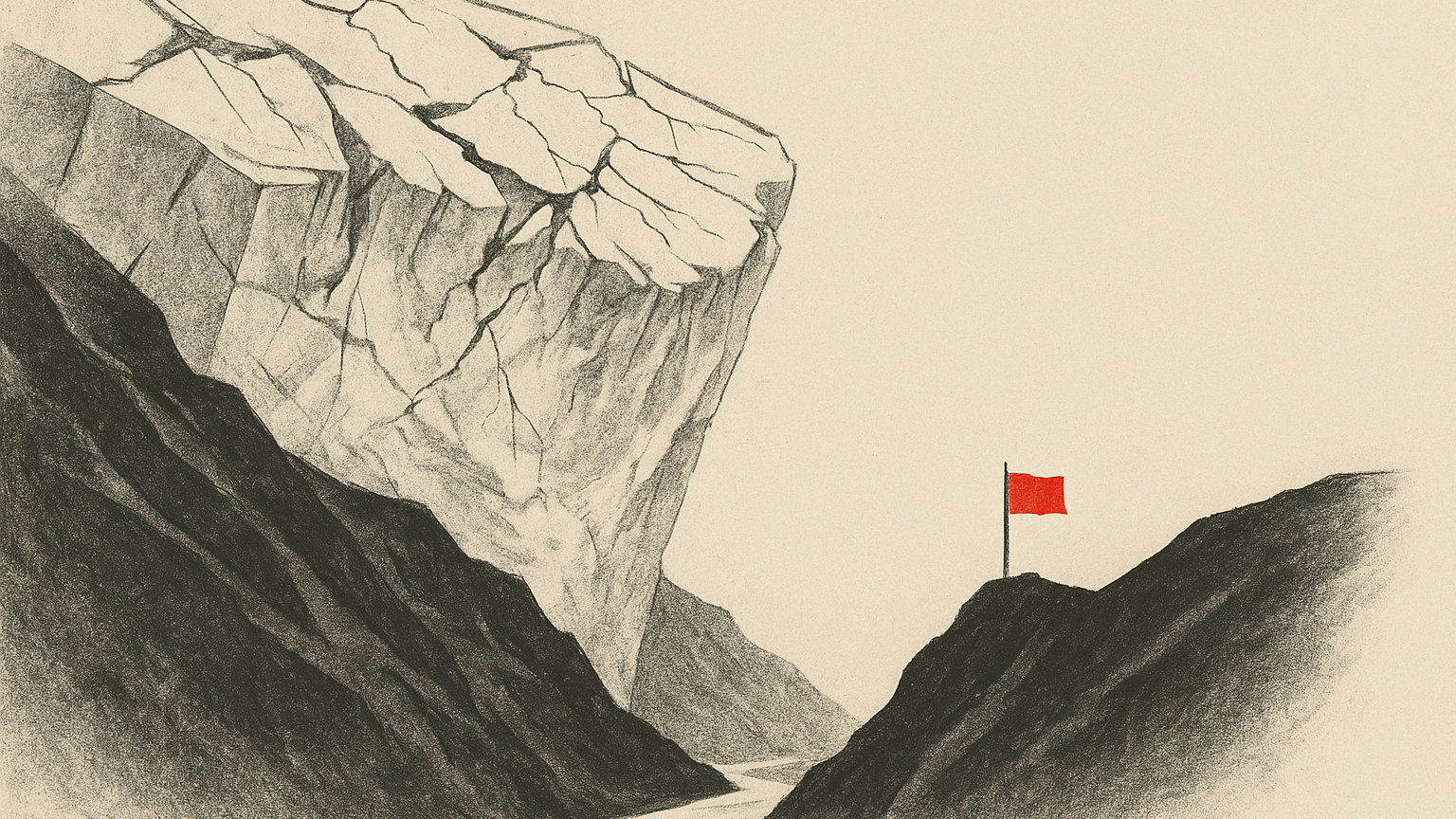
On August 26, a glacier collapsed in the high Himalayas, sending a massive torrent of ice, rock, and mud across the Nepal-Tibet border. The death toll has surpassed 500, with thousands missing. This catastrophic event cannot be dismissed as a mere natural disaster. What triggered this glacier collapse, and what role did climate change play?
The immediate cause of the disaster was a glacier collapse in the high Himalayas. According to the US Geological Survey (USGS), this collapse generated seismic waves equivalent to a magnitude 5.2 earthquake, but it was not an actual earthquake. Instead, it was a 'glacier collapse and debris flow' caused by the falling ice and rock. This unleashed a massive torrent of ice, rock, and mud downstream, inundating the Trishuli River and its tributaries.
Examining why this collapse occurred reveals the underlying influence of climate change. Glaciers and permafrost in the Himalayan region are melting faster than the global average, increasing the frequency of extreme events like glacier collapses and glacial lake outburst floods (GLOFs).
Glacier Collapse: More Than Just an Avalanche
This event differs from the commonly discussed 'glacial lake outburst floods.' Some reports suggested that the glacier collapse blocked a river, forming a natural dam that later broke, causing the flood. However, experts indicate that this was an 'ice-rock avalanche,' where the glacier itself collapsed, directly pushing water and debris downstream.
The direct collapse likely resulted from complex factors, such as the disruption of englacial drainage and rapid meltwater influx weakening the glacier. A 2025 case reported in a scientific journal showed a massive glacial lake suddenly released through an englacial conduit, significantly impacting downstream areas. A similar internal structural collapse might have triggered this glacier collapse.
Not all experts agree on the interpretation. Some emphasize that this was not a traditional GLOF, highlighting that the glacier collapse itself was the cause, not the formation and bursting of a natural dam. This serves as a warning that relying solely on glacial lake monitoring is insufficient for future strategies.
Monitoring and Warning Systems: Are We Prepared?
Research has been conducted using satellite-based radar interferometry and satellite temperature observations to predict glacial lake risks. Recently, efforts have been made to predict GLOFs using deep learning. However, in cases like this ice-rock collapse, the existing monitoring systems focused on dam failures reveal their limitations.
The Himalayan region has already experienced cascading GLOFs, such as the 2024 event in the Thame Valley near Everest, which destroyed villages, and a similar flood in the Rasuwagadhi area in 2025. These recurring incidents highlight a chain of climate change-induced risks, rather than isolated events.
The challenge now is how to detect and respond to these complex high-altitude risks. Beyond observing glacial lakes, an integrated monitoring system is needed to assess glacier internal structures, seismic activity, and changes in meltwater flow due to climate change. Strengthening community response capabilities, establishing early evacuation systems, and fostering international cooperation are also essential.
The recent Nepal-Tibet floods starkly illustrate how climate change is destabilizing glaciers in high-altitude regions. This instability could foreshadow future 'days when the ice wall collapses.' Our task now is to refine warning systems and prepare the most vulnerable to survive before that day arrives.
This article was produced with the assistance of AI using publicly available sources and has undergone The Gist’s factual and source-verification process. Original sources are listed below. Errors and corrections: corrections@thegist.co.kr
Sources
- S1 — The National2026-08-28 · accessed 2026-08-28
- S2 — The Guardian2026-08-27 · accessed 2026-08-28
- S3 — Nature2026-08-27 · accessed 2026-08-28
- S4 — AP News2026-08-28 · accessed 2026-08-28
- S5 — AP News2026-08-27 · accessed 2026-08-28
- S6 — ScienceDirect2026-06-29 · accessed 2026-08-28
- S7 — MHEWC2026-08-26 · accessed 2026-08-28
- S8 — arXiv2026-08-12 · accessed 2026-08-28
- S9 — arXiv2026-01-18 · accessed 2026-08-28
- S10 — arXiv2025-12-30 · accessed 2026-08-28
- S11 — NHESS (Copernicus)2026-08-26 · accessed 2026-08-28
- S12 — Wikipedia2025-10-01 · accessed 2026-08-28