Security
Strategic Calculations or Security Justifications: The Forced Evictions in Hebron
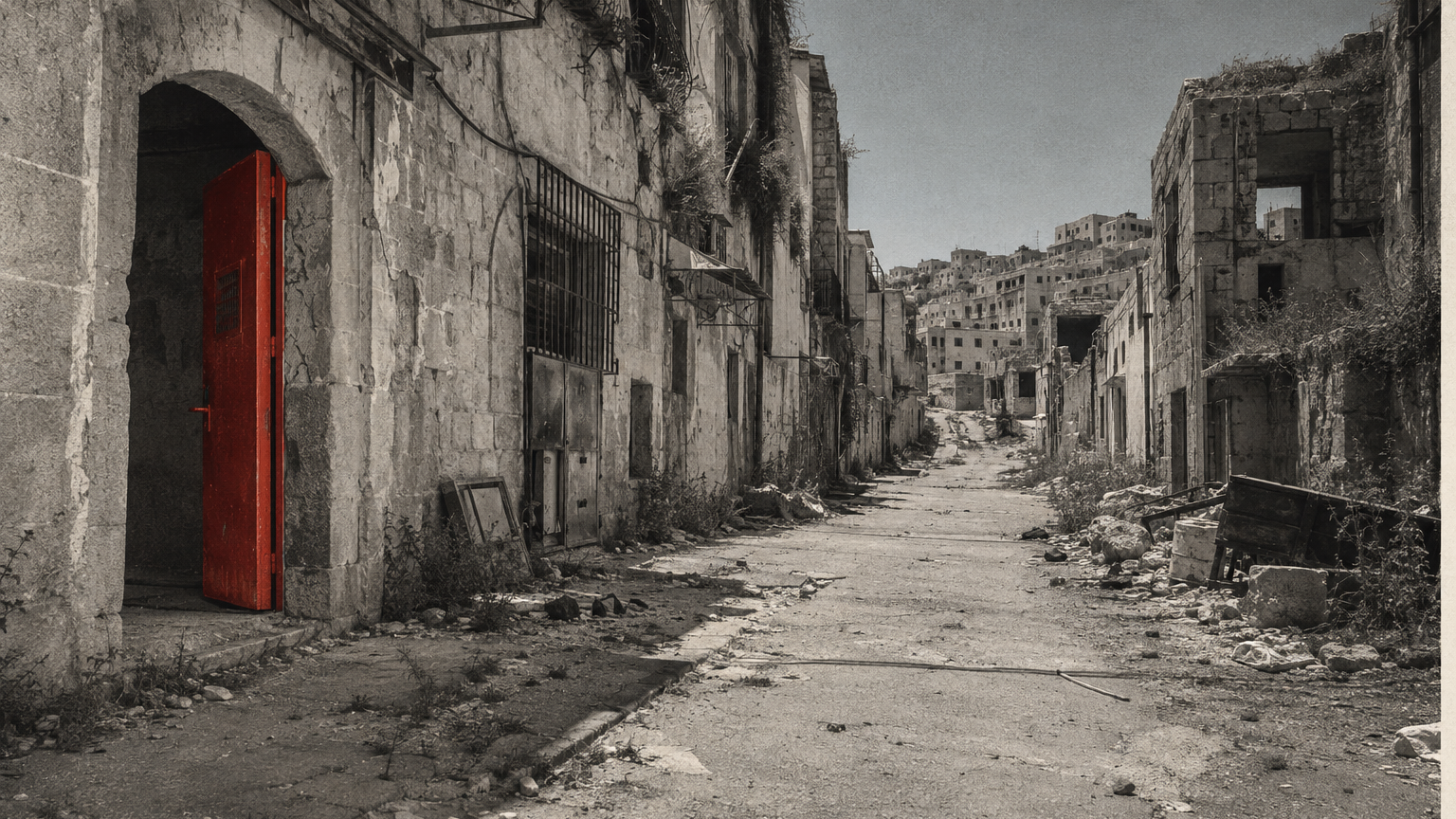
The recent forced displacement of over 1,500 Palestinian residents by the Israeli military in Hebron raises questions about whether this was merely a security response or a political maneuver ahead of upcoming elections, or perhaps a combination of both. This inquiry prevents the incident from being viewed solely as a military operation and prompts an examination of its background, motivations, international legal issues, and potential repercussions.
The forced displacement in Hebron occurred shortly after Palestinian militants attacked a military checkpoint, resulting in the deaths of two Israeli soldiers. The Israeli military launched a large-scale operation in the area, leading to the forced relocation of approximately 1,500 residents from the Al-Zaladah and Ein Dir Baha areas. These areas were home to about 2,500 people, with over 1,000 more at risk of displacement. Reports highlighting women, children, and the elderly being driven into the streets underscore the humanitarian impact of this action.
The Guardian points out that the operation resembles 'collective punishment.' Around 35 hectares were destroyed, and hundreds of families were displaced. Israeli Prime Minister Netanyahu vowed to 'destroy' the area, while far-right Finance Minister Smotrich called for a full-scale military campaign 'like in Gaza and Lebanon.' These statements suggest that the operation carries a political message beyond mere security concerns.
The Times of Israel analyzes the operation within the context of upcoming elections. Prime Minister Netanyahu has promised a 'big surprise,' stating that the area where terrorists operated would be thoroughly cleared, akin to the operation in the northern Jordan Valley refugee camp in 2025. Local residents criticize the operation as a political tool for electoral victory.
The Palestinian Foreign Ministry warns that this action may represent a new form of 'mass displacement' reminiscent of the 1948 Nakba. This goes beyond a military response, evoking historical trauma with symbolic significance. Appeals to the international community emphasize that this situation is not merely a conflict but a structural issue threatening national identity and survival rights.
The UN Human Rights Office has reported that over 1,500 Palestinian residents have been forcibly displaced in the West Bank this year alone. This accounts for a third of all forced displacements, indicating that the Hebron incident is part of a continuing trend rather than an isolated event. Warnings that forced displacement of civilians in occupied territories could constitute a war crime are also being raised.
Israeli human rights group B'Tselem criticizes the action as 'collective punishment' and potentially a violation of international law. They call for immediate international intervention, stressing that this situation is not merely a security response but a complex issue involving legal and moral dimensions.
Le Monde reports that recent settler violence and military operations function as 'routine cleansing' in Palestinian areas. The phrase 'a tsunami of Jewish terrorism' reflects concerns that the Hebron operation is part of a gradual and systematic strategy to remove Palestinian residents.
In this context, the operation appears to be a result of intertwined political calculations and security logic. The intent of political leaders to project a strong security image to voters ahead of elections is evident. Simultaneously, the justification of 'removing terror infrastructure' provides military legitimacy and somewhat mitigates international criticism.
This incident will not conclude as merely a local military operation. Its impact will vary significantly based on the international community's response, particularly from the UN and human rights organizations, as well as changes in Israel's political landscape and election outcomes. Additionally, how Palestinian resistance and backlash are organized and spread will be a key aspect to watch.
The forced evictions in Hebron occurred at the intersection of security and politics. The complexity of the background, statements, and international legal implications makes it difficult to dismiss as a mere military response. Readers are prompted to reflect deeply on how national security logic can transform into a political tool and how civilian rights are sacrificed in the process.
This article was produced with the assistance of AI using publicly available sources and has undergone The Gist’s factual and source-verification process. Original sources are listed below. Errors and corrections: corrections@thegist.co.kr
Sources
- S1 — Arab News2026-10-24 · accessed 2026-10-24
- S2 — The Guardian2026-10-24 · accessed 2026-10-24
- S3 — The Times of Israel2026-10-24 · accessed 2026-10-24
- S4 — United Nations2026-09-01 · accessed 2026-10-24
- S5 — Arab News2026-10-23 · accessed 2026-10-24
- S6 — Le Monde2026-10-18 · accessed 2026-10-24