Security
Echoes of Airstrikes: The Lasting Cry of a Market
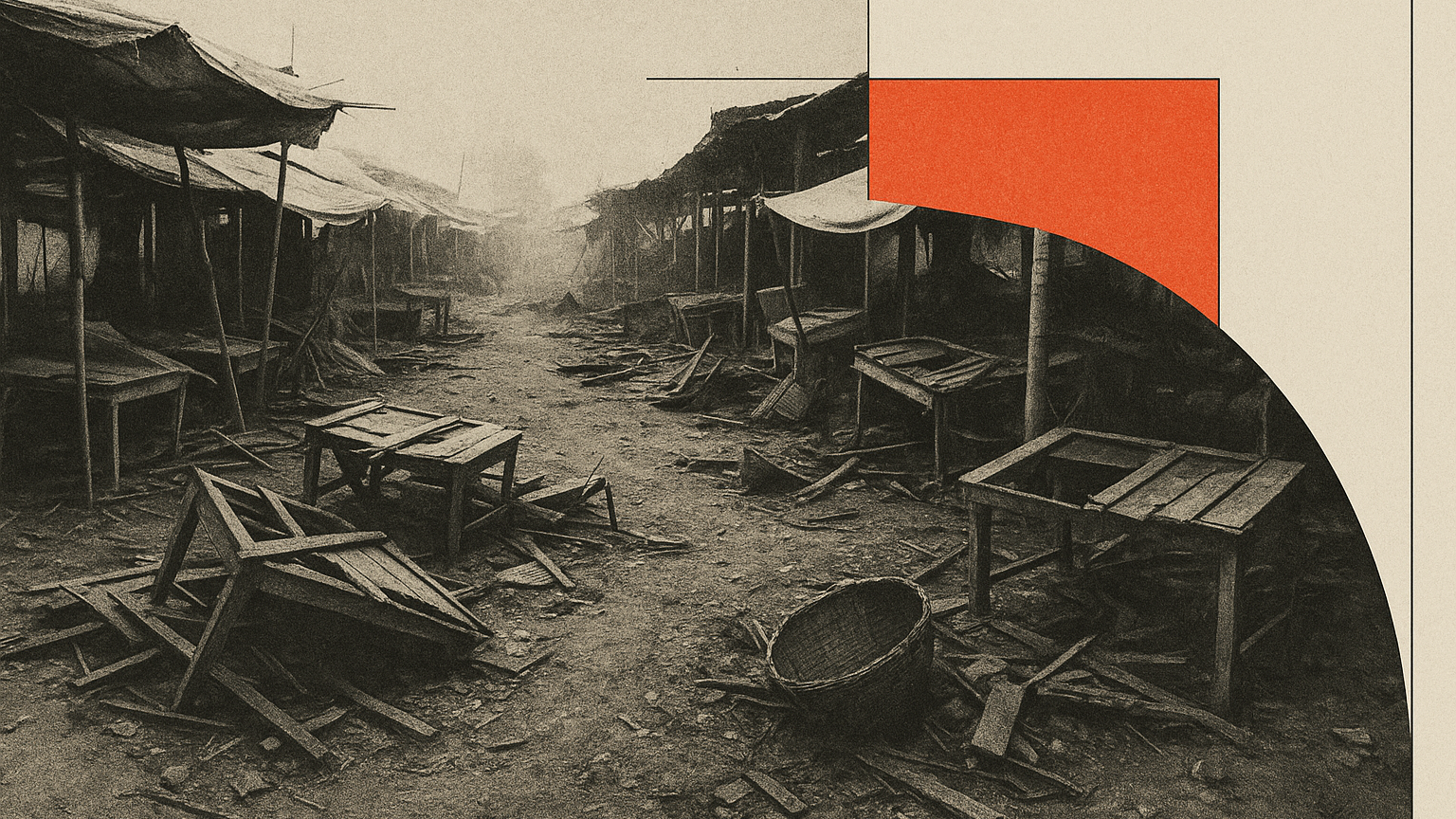
The news of a Myanmar military airstrike decimating the market in Kyauktaw, Rakhine State, resulting in 50 deaths and 58 injuries, prompts questions that go beyond mere numbers. How should we interpret the intent and context of this attack? Was it aimed at military targets, or was it a strategic act to instill fear among civilians?
The question of whether this airstrike was aimed at military targets or intended to instill fear among civilians becomes more pressing when considering the recurring pattern of civilian casualties in Rakhine State. The attack targeted the market, an adjacent bridge, and residential areas. The Arakan Army claimed that the military "deliberately targeted crowded markets, schools, and civilian buildings," suggesting the possibility of intentional violence rather than accidental strikes.
The backdrop to these repeated attacks is the nationwide civil war that has spread since the military coup in 2021. In Rakhine State, various armed groups, including the Arakan Army, have been fighting against the military, which has employed aggressive suppression strategies, including airstrikes. From November 2023 to March 2024, the military conducted 588 airstrikes across Myanmar, with 19% targeting Rakhine State, and 34% of those strikes affecting civilians.
The interpretation that airstrikes are used as a means of strategic terror against civilians goes beyond a mere military response. International human rights organizations have criticized Myanmar's military for repeatedly targeting civilian infrastructure—schools, hospitals, markets—to disrupt daily life and break the will to resist. For instance, the December 2025 airstrike on Mrauk-U hospital in Rakhine, which killed dozens, sparked international concern over the military's approach to civilian facilities as 'legitimate military targets.'
The repeated targeting of civilian infrastructure suggests that the military's strategy extends beyond merely suppressing insurgents to controlling civilian life itself. Markets, schools, and hospitals are community hubs and potential bases of resistance. By destroying them, the military may aim to weaken community cohesion and isolate support for armed groups.
However, the possibility that the military might claim these attacks as legitimate military operations targeting 'rebel bases or supply routes' cannot be dismissed. The military has asserted that the airstrikes were the result of 'restraint to minimize civilian harm.' Yet, with the mounting civilian casualties and international criticism, such claims are losing credibility. Particularly, this attack, one of the deadliest in Rakhine, has been met with increased skepticism.
If the strategy of instilling fear among civilians continues, the potential for community collapse and a large-scale humanitarian crisis is significant. Millions have already been displaced domestically and internationally due to the civil war, with hundreds of thousands forced to leave their homes in Rakhine. Continued airstrikes threaten the survival of remaining residents and will likely intensify calls for international intervention.
The questions left by this tragedy extend beyond 'who and why did they die.' We must now ask, 'How does war wield fear as a weapon to destroy communities?' The answer begins with acknowledging that the Myanmar civil war is not merely a military conflict but a reality of strategic violence targeting civilian life. This question leaves the international community with the task of responding to the Myanmar crisis and redefining the meaning of war.
This article was produced with the assistance of AI using publicly available sources and has undergone The Gist’s factual and source-verification process. Original sources are listed below. Errors and corrections: corrections@thegist.co.kr
Sources
- S1 — The Straits Times2026-09-29 · accessed 2026-09-29
- S2 — Associated Press2026-09-28 · accessed 2026-09-29
- S3 — ACLED2026-09-15 · accessed 2026-09-29
- S4 — OHCHR (UN)2026-02-01 · accessed 2026-09-29
- S5 — Amnesty International2026-09-01 · accessed 2026-09-29
- S6 — Center for Arakan Studies2026-04-30 · accessed 2026-09-29
- S7 — Wikipedia2026-05-01 · accessed 2026-09-29
- S8 — Associated Press2026-08-15 · accessed 2026-09-29