Security
Winter's Tactical Assault on Power Grids: Russia's Energy Warfare in Ukraine
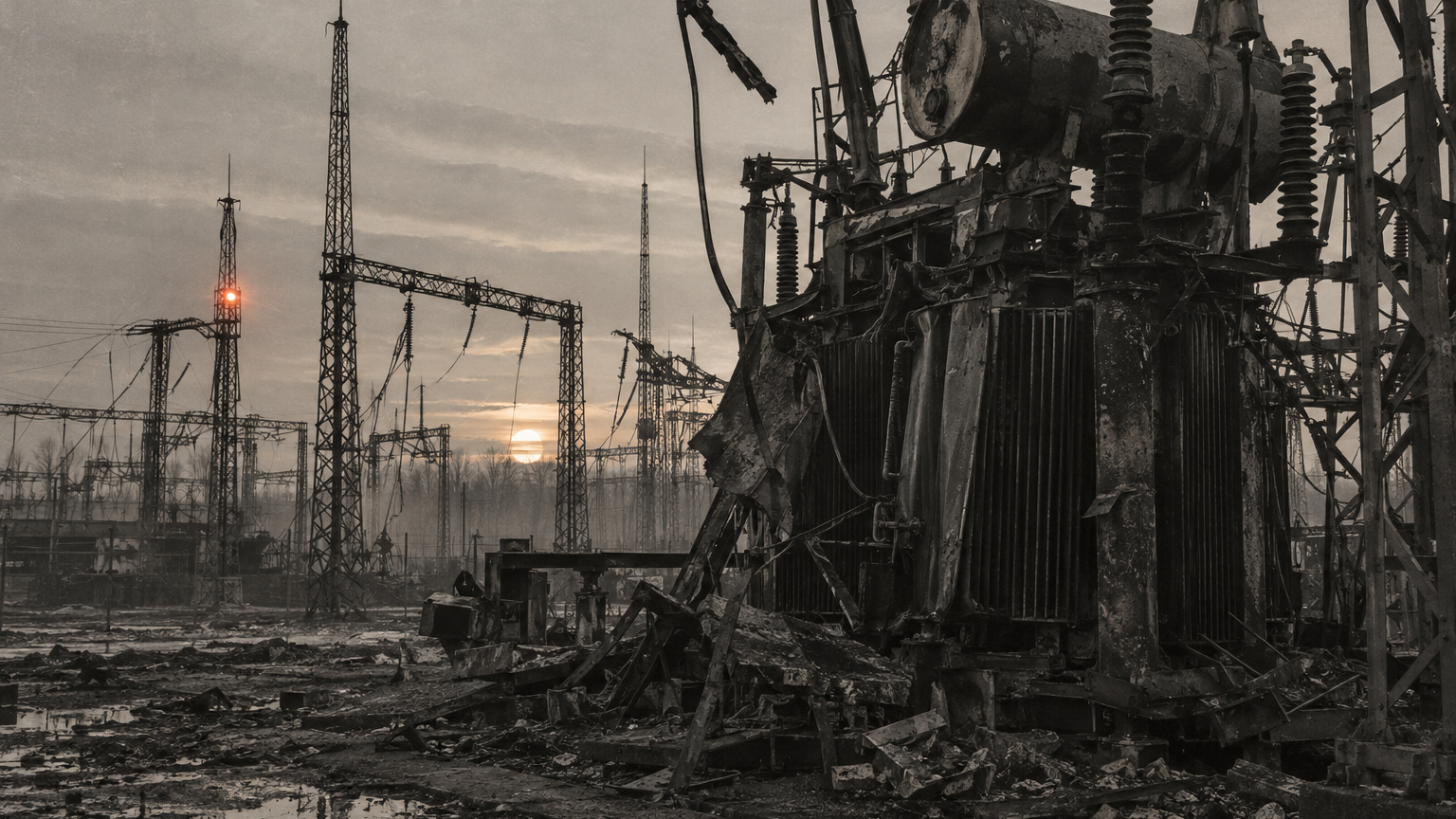
On November 8, a Russian attack left approximately 850,000 people without electricity in Ukraine's Dnipropetrovsk and Kharkiv regions. This incident is not merely a blackout but a convergence of structural vulnerabilities in the power grid and wartime strategy. What structural weaknesses in Ukraine's energy system are exposed by Russia's repeated infrastructure attacks, and how can they be mitigated?
Al Jazeera reported that the recent attack resulted in 600,000 people losing power in Dnipropetrovsk and 250,000 in Kharkiv, emphasizing that repair efforts are delayed due to repeated strikes. This reality of ongoing assaults on the power grid suggests that Ukraine's energy system is overly reliant on specific critical nodes.
The International Energy Agency (IEA) assesses that Ukraine has introduced various measures such as distributed generation, battery storage, and gas-fired power plants to enhance grid resilience. However, these efforts are not yet fully integrated, and there is a bottleneck in transmitting imported electricity to the eastern regions. This indicates the persistence of a vulnerable centralized structure.
Furthermore, the IEA's report on energy system resilience reveals that Russia has been strategically targeting key substations using detailed information accumulated since the Soviet era. These substations are crucial nodes connecting power plants and consumers, and their destruction requires significant time and resources to repair. Russia is employing a precise strategy aimed at the 'neural network' of the power grid, not just random bombings.
This attack strategy extends beyond merely cutting off power supply. The Office of the United Nations High Commissioner for Human Rights (OHCHR) reported that during the winters of 2025-2026, Russia repeatedly attacked energy facilities, leaving millions of civilians without electricity. This demonstrates that power grid attacks are used as a means to directly target civilian life, beyond military objectives.
Ukraine's power grid is vulnerable to repeated attacks due to its reliance on critical nodes and centralized structure. To address this, expanding distributed power systems, enhancing grid connectivity for smooth transmission of imported electricity, and strengthening the protection of critical facilities are necessary. The IEA emphasizes the importance of multi-year resilience planning, strategic equipment stockpiling, and proactive procurement, especially in preparation for winter.
Conversely, some analysts believe that Russia is employing a strategy that avoids completely collapsing the power grid. This could be an intention to keep Ukraine's power supply as a 'lever' that can be weaponized at any time, rather than fully dismantling it. The strategic significance of power grid attacks lies in their potential to serve as a long-term deterrent rather than just short-term destruction.
In this context, strengthening Ukraine's energy resilience requires more than just infrastructure repair; it demands a structural redesign of the power grid and the establishment of strategic defense systems. Enhancing distributed generation, strengthening interregional connectivity, protecting critical facilities, and implementing multi-year plans with international cooperation are all part of this strategy. Recognizing power grid attacks as a strategic tool targeting civilians in the continuum of war could provide the international community with grounds to classify them as war crimes and respond accordingly.
The remaining challenge is not just how Ukraine will endure this winter, but whether it can reconceptualize its power grid as a strategic space in warfare and restructure it accordingly. This question is not unique to Ukraine but is a challenge for all modern nations where war and energy security intersect.
This article was produced with the assistance of AI using publicly available sources and has undergone The Gist’s factual and source-verification process. Original sources are listed below. Errors and corrections: corrections@thegist.co.kr
Sources
- S1 — Al Jazeera2026-11-08 · accessed 2026-11-08
- S2 — International Energy Agency (IEA)2026-11-04 · accessed 2026-11-08
- S3 — International Energy Agency (IEA)2026-01- · accessed 2026-11-08
- S4 — Office of the United Nations High Commissioner for Human Rights2026-07- · accessed 2026-11-08
- S5 — Critical Threats2026-11-04 · accessed 2026-11-08
- S6 — Reddit / CredibleDefense2026-02- · accessed 2026-11-08