Technology
What the Tesla Roadster's 'Flight' Reveals
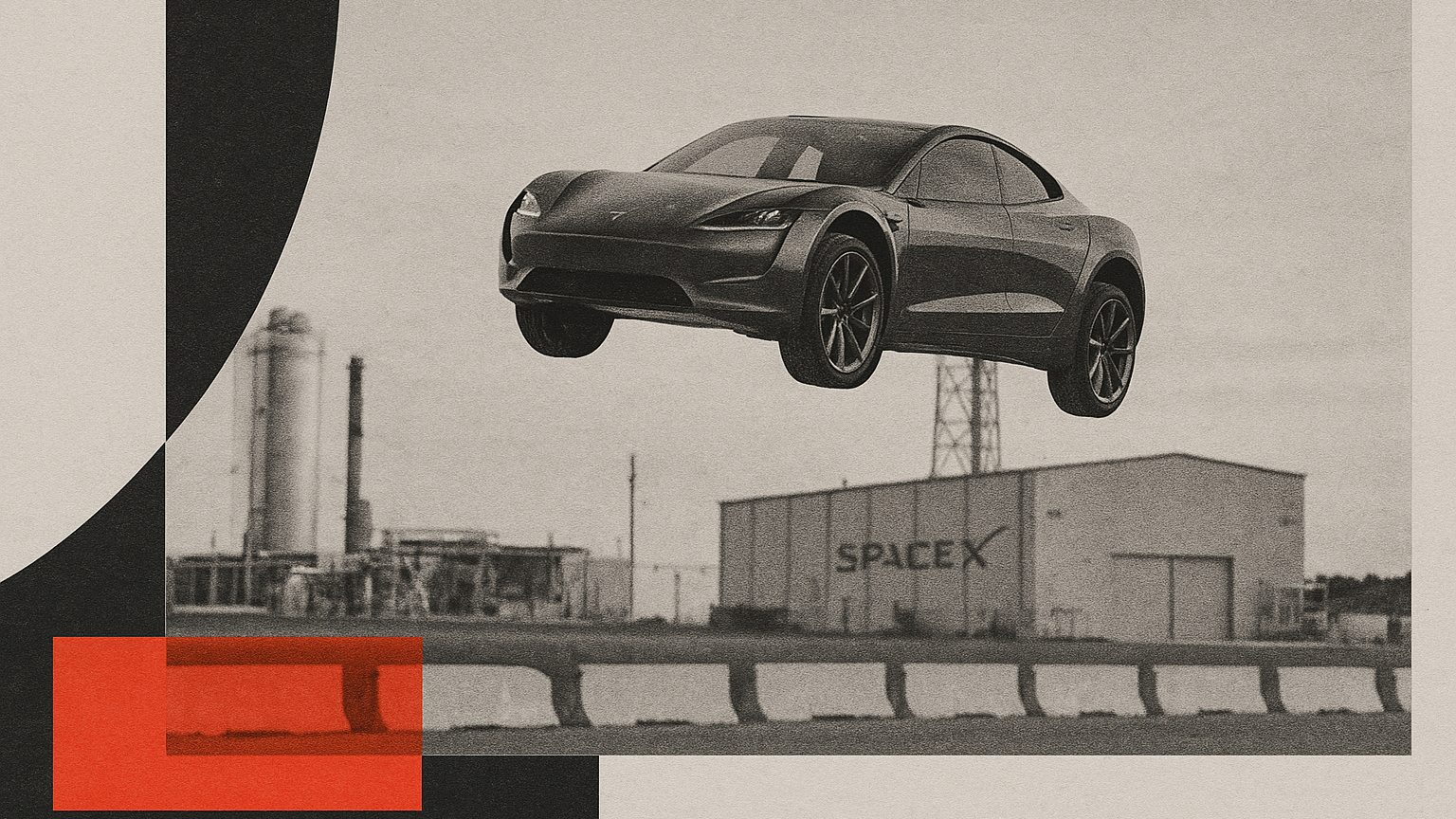
On October 15, 2026, Elon Musk showcased the Tesla Roadster at the SpaceX test site near Waco, Texas, creating a scene reminiscent of the long-held dream of a 'flying car.' However, this performance goes beyond mere technological showmanship, prompting questions about the actual feasibility and implications of the 'flying car' we've yearned for.
The Roadster was unveiled as it ascended vertically on a curved ramp, hung suspended by a fan system, and performed a 180-degree aerial rotation using cold-gas thrusters before landing. CBS News described it as making 'flying cars a reality.' Yet, this scene raises fundamental questions about whether it can truly be called 'flight' or if it's merely showmanship.
In reality, the Roadster combines a fan-based adhesion system with SpaceX's cold-gas thrusters to enable brief 'hovering' and aerial rotation. MotorTrend noted that while the vehicle won't perform long-distance flights like an eVTOL, it will likely hover in confined spaces, highlighting the gap between the exaggerated term 'flying car' and technical reality.
The technology operates through a combination of 'downforce' that adheres the vehicle to surfaces with fans and propulsion from thrusters that fire in multiple directions. FlyingRoadster.net explains that this performance is made possible by the arrangement of nozzles at the rear, bottom, and front, generating about 2g of downforce, and a tank holding hundreds of liters of compressed air. This goes beyond mere visual effects, representing a technical implementation based on actual physical principles.
Nevertheless, this Roadster is not a vehicle that can be driven on regular roads. Kelley Blue Book pointed out that this model, the 'Rocket' version, is available only to a select few and lacks any assurance of road legality. This underscores the gap between technological possibility and commercial realization.
Meanwhile, the performance symbolically demonstrates Tesla's evolution from a mere car manufacturer to a future-focused company centered on AI and robotics. Axios interpreted this unveiling as suggesting Tesla's departure from the traditional car business. Thus, the Roadster can be seen as both a technological experiment and a signal of a shift in corporate identity.
From another perspective, some view this performance as an 'exaggerated show.' FlyingRoadster.net criticized it as mere 'hovering' rather than 'true flight,' and a Smithsonian vertical flight curator likened it to a short jump rather than actual flight. This serves as a warning that technological spectacle can distort realistic expectations.
Nevertheless, the questions raised by this performance remain pertinent. The 'flying car' we've dreamed of is not just science fiction but a technological challenge and regulatory issue. The FAA already requires flight paths and permissions for eVTOLs, and Tesla's Roadster would need to navigate these regulatory frameworks to truly take to the skies.
What remains is whether this technology can evolve beyond a performance into a practical and safe mode of transportation. Tesla's plan to produce this Roadster as a 2028 model suggests that the technological experiment might lead to commercial reality. However, this path must navigate complex variables such as regulation, safety, cost, and actual demand.
The Roadster reveals not just the realization of a 'flying car' but the tension between technological fantasy and reality. It asks us whether we truly want a 'flying car,' what form it should take if possible, and if we are ready to embrace that future.
This article was produced with the assistance of AI using publicly available sources and has undergone The Gist’s factual and source-verification process. Original sources are listed below. Errors and corrections: corrections@thegist.co.kr
Sources
- S1 — CBS News2026-10-16 · accessed 2026-10-17
- S2 — MotorTrend2026-10-14 · accessed 2026-10-17
- S3 — FlyingRoadster.net2026-10-17 · accessed 2026-10-17
- S4 — Kelley Blue Book2026-10-16 · accessed 2026-10-17
- S5 — Axios2026-10-16 · accessed 2026-10-17
- S6 — FlyingRoadster.net2026-10-17 · accessed 2026-10-17
- S7 — Wikipedia2026-10-17 · accessed 2026-10-17