Security
US Strikes on Iranian Oil Tankers: Strategic Message or Prelude to an Energy War?
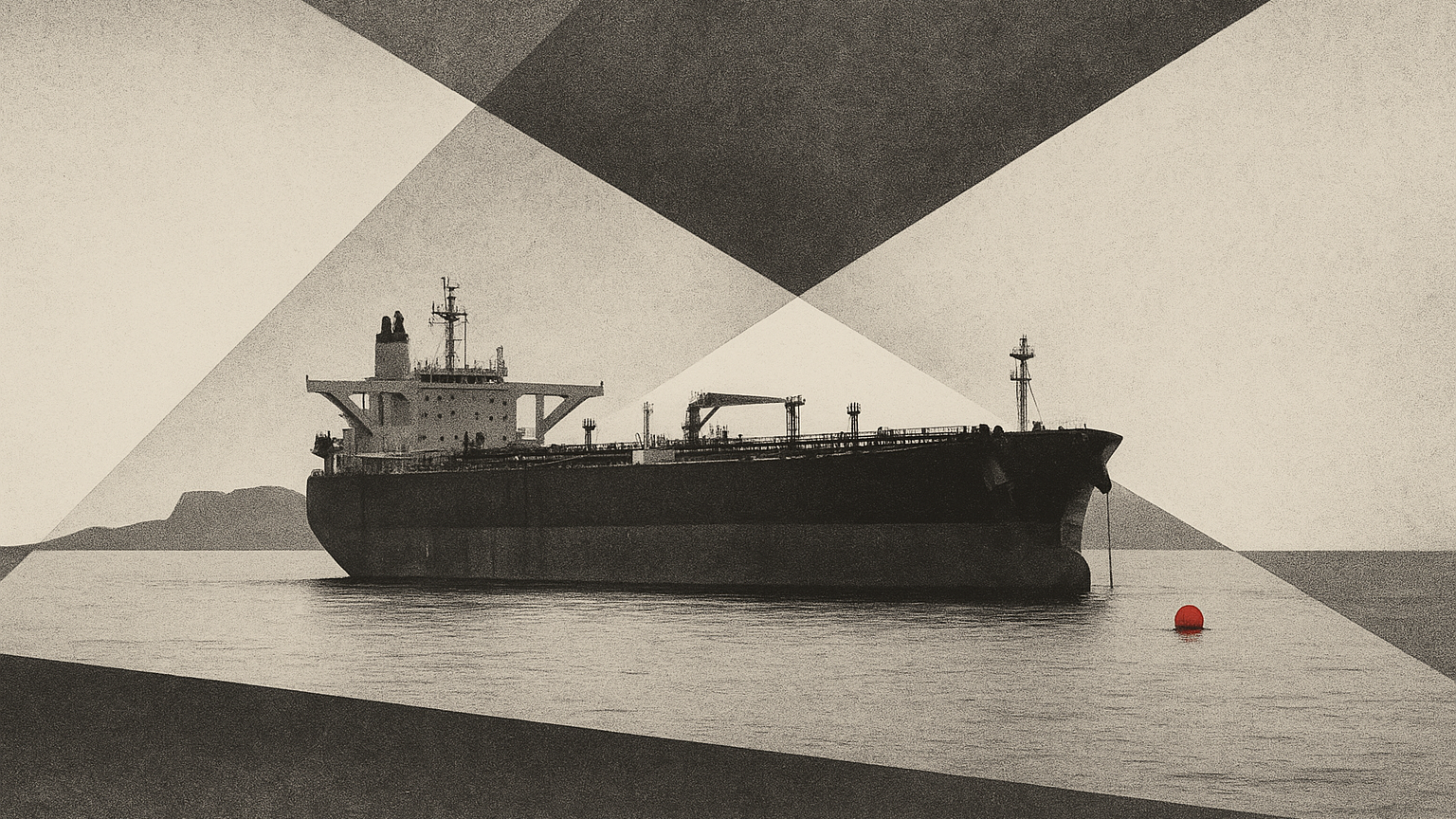
On September 5, 2026, the United States struck three Iranian oil tankers in the Persian Gulf in retaliation for the Iranian Revolutionary Guard Corps (IRGC) launching missiles at a US Navy vessel. One of the tankers was attacked near Kharg Island, a major Iranian oil export hub. This incident raises questions about the strategic message it sends concerning Middle Eastern energy supply and international politics, beyond a mere military response.
Iranian media reported an explosion near Kharg Island, while the US stated that the strike on three oil tankers was in response to the IRGC's missile attack on a US aircraft carrier and destroyer. According to the US Central Command (CENTCOM), two of the tankers were permanently disabled, and one was completely destroyed.
According to the Associated Press, the US determined that the tankers were involved in the attack on the Navy ship and responded accordingly. CENTCOM warned that it could completely destroy Iran's exposed oil transport capabilities if necessary.
Kharg Island is a strategic point where 90% of Iran's oil exports are processed. The tankers act as 'floating storage' to prevent system overload. The attack on these tankers suggests a strategic blow aimed at Iran's economic foundation, beyond a simple military confrontation.
For decades, Kharg Island has been the center of Iran's oil exports, featuring the only deep-water port capable of accommodating supertankers. An attack on this location can be interpreted as a symbolic message targeting Iran's economic lifeline.
Occupying Kharg Island would pose significant risks to US troops' lives, and experts warn that such an operation might not effectively end the conflict with Iran. This suggests that the recent attack was more of a 'warning' than an attempt at occupation.
The US appears to have applied a 'tanker-for-tanker' response principle, directly targeting oil tankers in retaliation for Iran's missile attack on Navy ships, indicating an intention to strengthen military deterrence.
Former President Donald Trump recently used AI-generated videos to exaggerate the destruction of Kharg Island, impacting the energy market without actual attacks. The real attack can be seen as an extension of this 'psychological warfare.'
Following the IRGC's missile attack, the US military 'permanently disabled' the tankers, interpreted as an attempt to directly weaken Iran's oil export capabilities, beyond a mere military response.
Just as Trump's AI video raised oil prices by over 3% without an actual attack, predicting the impact of this real attack on the energy market is challenging. The market effects of the actual attack could be far more complex than those of the video.
The difficulty of occupying Kharg Island highlights the limited scope of US strategic objectives. The attack represents 'partial pressure' rather than a full-scale war, with clear limitations.
Given that Iran has maintained oil exports by using tankers as 'floating storage,' the attack also tests Iran's flexible response capabilities. Iran may still find alternative routes to maintain exports.
Some analysts worry that the attack could provoke Iranian retaliation or escalate regional tensions. This situation illustrates that military responses do not always lead to strategic gains.
The US warning that it could completely destroy Iran's oil transport capabilities if necessary is seen as a strategic deterrent message. However, the actual effectiveness of this message depends on Iran's response and the international community's actions.
The attack on Kharg Island demonstrates that energy infrastructure can be central to military strategy. Future military conflicts in the Middle East may take on the characteristics of an 'energy war,' targeting economic foundations beyond mere military clashes.
This article was produced with the assistance of AI using publicly available sources and has undergone The Gist’s factual and source-verification process. Original sources are listed below. Errors and corrections: corrections@thegist.co.kr
Sources
- S1 — El País2026-09-05 · accessed 2026-09-05
- S2 — Associated Press2026-09-05 · accessed 2026-09-05
- S3 — The Washington Post2026-04-17 · accessed 2026-09-05
- S4 — Council on Foreign Relations2026-07-01 · accessed 2026-09-05
- S5 — Associated Press2026-04-17 · accessed 2026-09-05
- S6 — Reddit (user report)2026-09-05 · accessed 2026-09-05