Security
The Drone Revolution in Energy Warfare: Ukraine's Strategic Shift
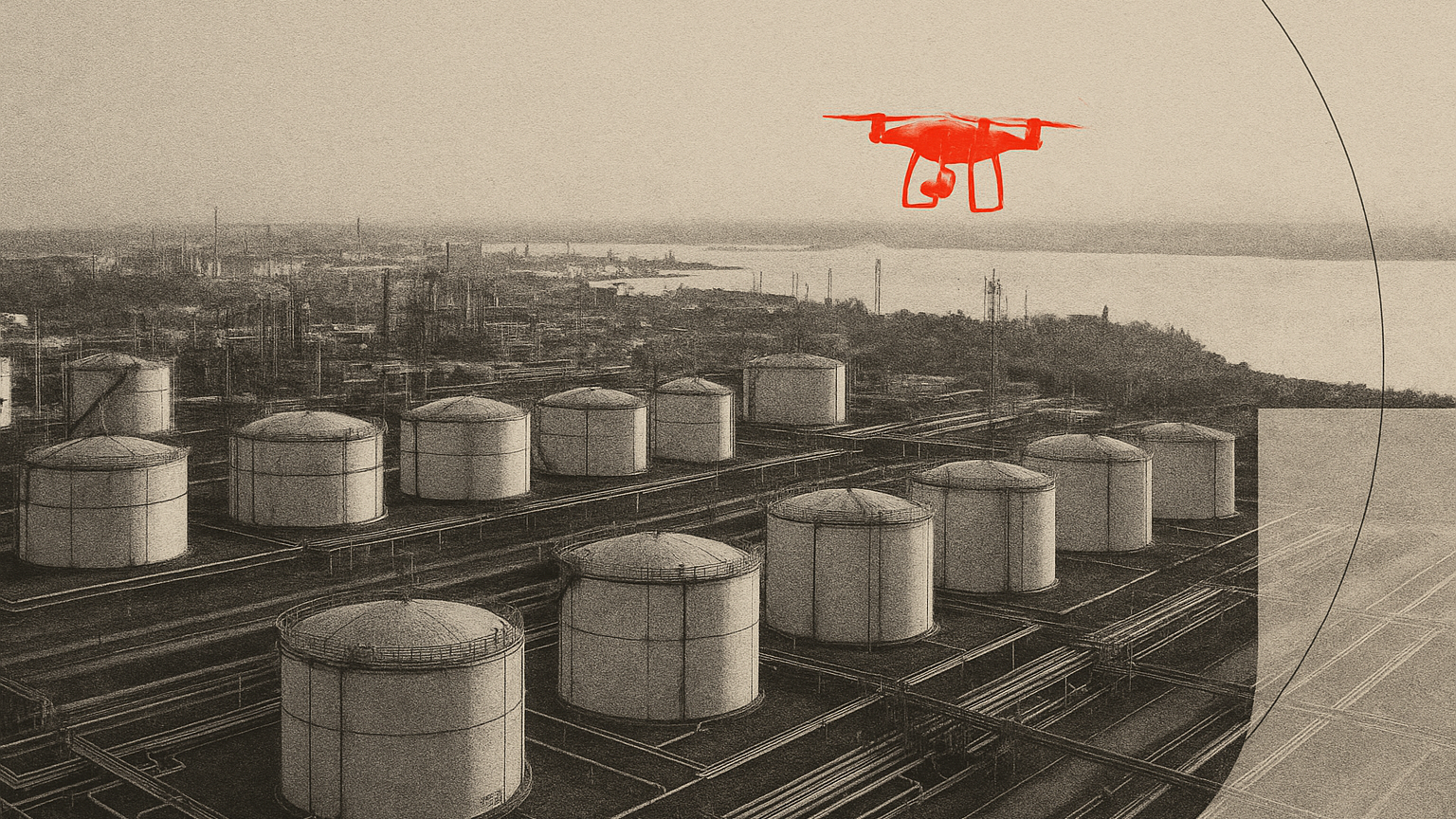
The news of Ukraine's drone attack on St. Petersburg on October 18, 2026, which targeted oil terminals, fuel storage, and industrial warehouses, resulting in at least one death and five injuries, highlights a new phase in energy security beyond mere military conflict. This incident raises questions about how drone technology is making traditional power grids and oil infrastructure vulnerable, and how these changes are altering the framework of war strategy and national security.
The first major change highlighted by this attack is the ability of drones to precisely target energy infrastructure, which has traditionally been vulnerable to defense. The assault on St. Petersburg's key oil terminals, fuel storage, and industrial warehouses, which led to restricted air travel and fires in parts of the city, demonstrates that drones have evolved beyond simple reconnaissance tools to strategic weapons. This attack not only caused physical damage but also exerted psychological pressure on Russia's energy supply chain and daily operations.
To understand the strategic significance of these drone attacks, it is essential to consider that Ukraine has been targeting Russian refining facilities intensively since 2025. The International Energy Agency (IEA) reported that Russian refining throughput decreased by over 20% in the first half of 2026, with diesel production dropping nearly 30%. This suggests that repeated drone attacks are inflicting structural damage on Russia's refining industry, beyond mere temporary destruction.
The way drones are targeting energy infrastructure is redefining the very concept of energy security. Traditionally, energy security focused on the stability and diversification of supply chains and storage capacity. Now, drone defense systems, infrastructure decentralization, and 'resilience by design' have become essential components. Gregory Brew, an analyst at Eurasia Group, emphasized that "if there is any potential for physical conflict in a region, drone defense must be considered when constructing energy infrastructure."
However, there are limitations to this strategic shift. Establishing drone defense networks involves costs and technical constraints. For a vast country like Russia, defending all energy facilities may be practically impossible. Additionally, there is analysis suggesting that Ukraine's drone attacks could trigger political instability within Russia. Some experts point out that strikes on refining facilities could lead to fuel shortages and inflation, undermining public support for the war.
There are also concerns that these drone attacks blur the lines of international norms and the boundaries of warfare. Energy facilities, traditionally considered civilian infrastructure and protected, are now becoming strategic targets. This reignites discussions on the 'legitimacy' and 'proportionality' of war. Meanwhile, the technological evolution of warfare is criticized for rendering traditional rules of war ineffective.
The remaining question is what impact these changes will have on future warfare and energy security. As drone technology becomes more sophisticated and cost-effective, energy infrastructure will continue to be a primary target. Consequently, nations must integrate defense into infrastructure design, develop decentralized energy systems, and establish cyber-physical hybrid defense systems. Additionally, the international community needs to create new norms and legal standards regarding the targeting of energy facilities in warfare.
The takeaway from this analysis is clear. As drones reshape the landscape of warfare and redefine energy security, we must think beyond defense to 'resilient design' and 'redefinition of norms.' These considerations will remain essential questions for reconstructing the conditions of peace, even after the war ends.
This article was produced with the assistance of AI using publicly available sources and has undergone The Gist’s factual and source-verification process. Original sources are listed below. Errors and corrections: corrections@thegist.co.kr
Sources
- S1 — Al Jazeera2026-10-18 · accessed 2026-10-18
- S2 — International Energy Agency (IEA)2026-09-17 · accessed 2026-10-18
- S3 — Axios2026-07-24 · accessed 2026-10-18
- S4 — The Daily Beast2026-08-18 · accessed 2026-10-18