Security
The Collapsed Arch of the Crimean Bridge: Ukraine's Strategic Blow
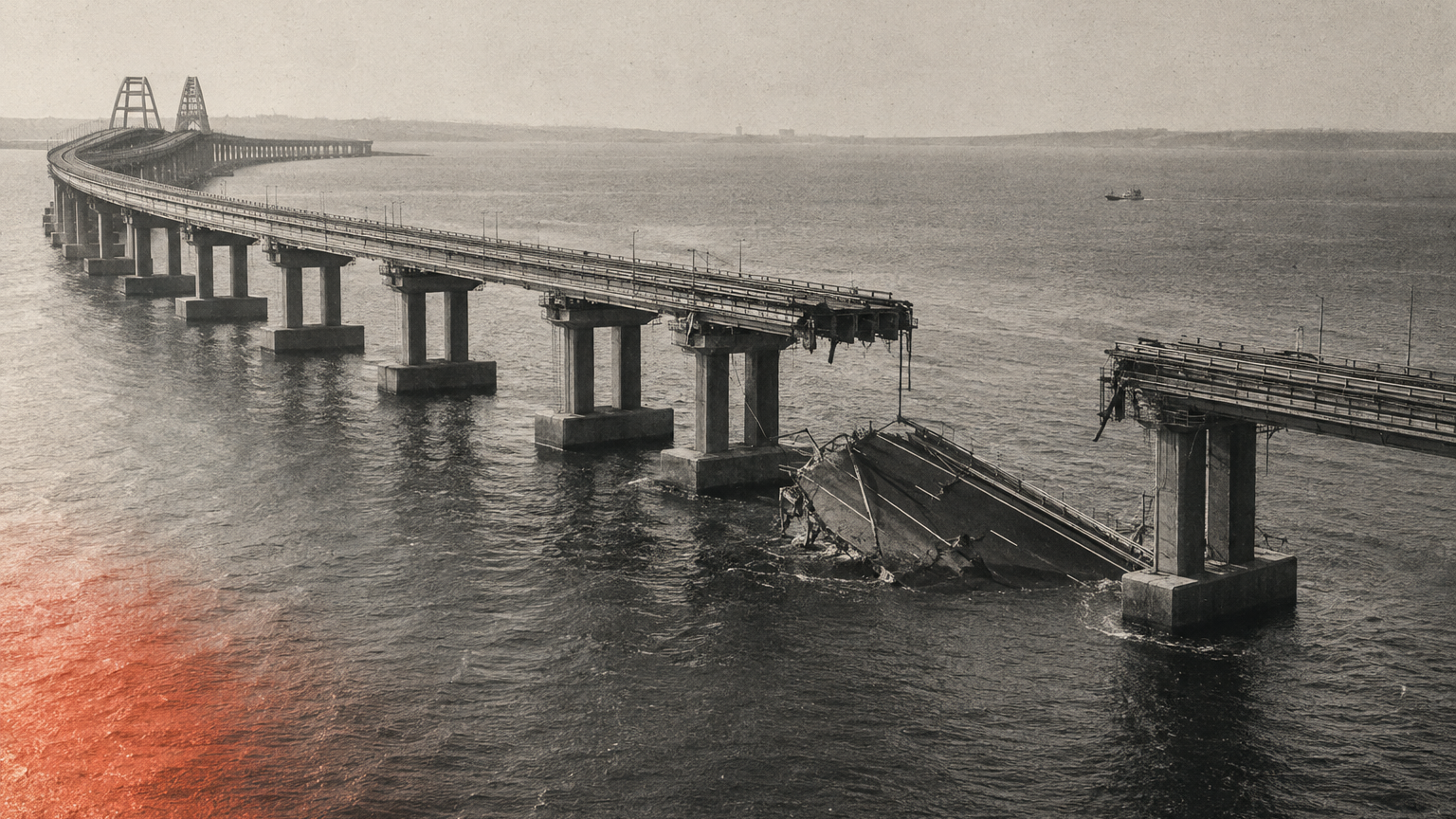
Ukraine's consecutive strikes on the Crimean Bridge on November 16 and 17, 2026, which collapsed part of the road arch and blocked the maritime passage of the Kerch Strait, raise questions about the potential for strategic disruption of Russian logistics in occupied territories. Could these attacks lead to actual logistical paralysis beyond symbolic gestures, and what are the limitations?
On November 16, 2026, Ukraine launched a drone attack that tilted a 227-meter arch of the Crimean Bridge by about 15 degrees and damaged part of the road. The following day, a combined drone and missile attack caused the arch and road section to collapse into the sea. Although the railway section was also damaged, some parts remain intact. The Russian Ministry of Transport announced a temporary halt to both road and rail traffic.
The collapse dropped approximately 6,000 tons of metal structure into the shipping lane, effectively blocking the Kerch Strait. Andriy Lysenko, a Ukrainian naval reserve captain and military expert, estimated that dismantling the debris could take weeks to months, during which maritime transport to Russian or occupied ports would be impossible.
These attacks are seen as part of Ukraine's long-term strategy to isolate Crimea militarily and logistically. By systematically targeting bridges, roads, railways, ports, and energy infrastructure with drones and missiles, Ukraine aims to increase the logistical burden on Russia. The Crimean Bridge is not only symbolic but also a crucial route for transporting military supplies and personnel, and repeated damage to it is intended to strain Russia's supply lines.
However, OSW notes that Russia has been reinforcing its air defenses and installing temporary bridges, making a complete blockade challenging. Ukraine's prioritization of expensive missiles for other targets also highlights the practical limits of fully destroying the Crimean Bridge.
ACLED's analysis highlights that Ukraine's mid-range strike campaign initially targeted radars and air defense systems but has expanded to roads, railways, bridges, ports, and energy facilities. Russia's attempts to bypass damaged bridges with pontoons or maritime transport have also become targets for Ukraine.
Ukraine is employing a 'network dismantling' strategy, flexibly shifting targets along Russia's supply routes. The collapse of the Crimean Bridge represents the pinnacle of this strategy, understood as part of a chain of attacks aimed at the entire logistics network rather than a single bridge.
ISW assesses that since 2023, Ukraine has been targeting bridges, railways, and ports to cut off Russian supply lines to Crimea and southern Ukraine. This strategy has weakened Russia's defensive capabilities and increased its logistical burdens, with the Crimean Bridge serving as a symbolic and strategic centerpiece.
This analysis shows that the strike on the Crimean Bridge has effects beyond immediate shock, imposing structural burdens on Russia's long-term supply system. However, it also notes that Russia has been adapting by securing alternative routes and diversifying its supply methods.
Experts suggest that if the Crimean Bridge is destroyed, Russia would have to supply through northern land routes and the isthmus, potentially leading to logistical chaos. However, as long as the bridge is not completely destroyed, Russia can still use alternative routes, suggesting that the recent collapse may not lead to an immediate military catastrophe.
In essence, the recent strikes have put significant pressure on Russia's logistics network, but further strikes and sustained pressure are needed for complete paralysis.
The remaining question is how long Ukraine can sustain this strategic assault. Repeatedly targeting the Crimean Bridge and surrounding supply networks could accumulate logistical burdens on Russia and increase the cost of maintaining occupied territories in the long run. However, Ukraine also faces the challenge of continually deploying expensive weapons and drone resources.
As Russia strengthens its air defenses and secures alternative routes, Ukraine's ability to maintain continuous strikes is tied to the broader resource competition of the war. For strategic strikes to translate into tactical success and political and economic pressure, Ukraine must maintain its advantage in weapon systems and intelligence.
The collapse of the Crimean Bridge has become a symbol of strategic pressure targeting the entire logistics network of Russia's occupied territories, beyond mere structural destruction. This event underscores the critical role of logistics in warfare, and the effectiveness of Ukraine's continued strategy will shape the future course of the conflict.
This article was produced with the assistance of AI using publicly available sources and has undergone The Gist’s factual and source-verification process. Original sources are listed below. Errors and corrections: corrections@thegist.co.kr
Sources
- S1 — RBC‑Ukraine2026-11-17 · accessed 2026-11-17
- S2 — OSW Centre for Eastern Studies2026-09-09 · accessed 2026-11-17
- S3 — ACLED2026-??-?? · accessed 2026-11-17
- S4 — Institute for the Study of War2025-04-?? · accessed 2026-11-17
- S5 — The New Voice of Ukraine2026-11-16 · accessed 2026-11-17