Society
The Collapse of 'Engineered Safety': Shadows of the Spanish High-Speed Train Disaster
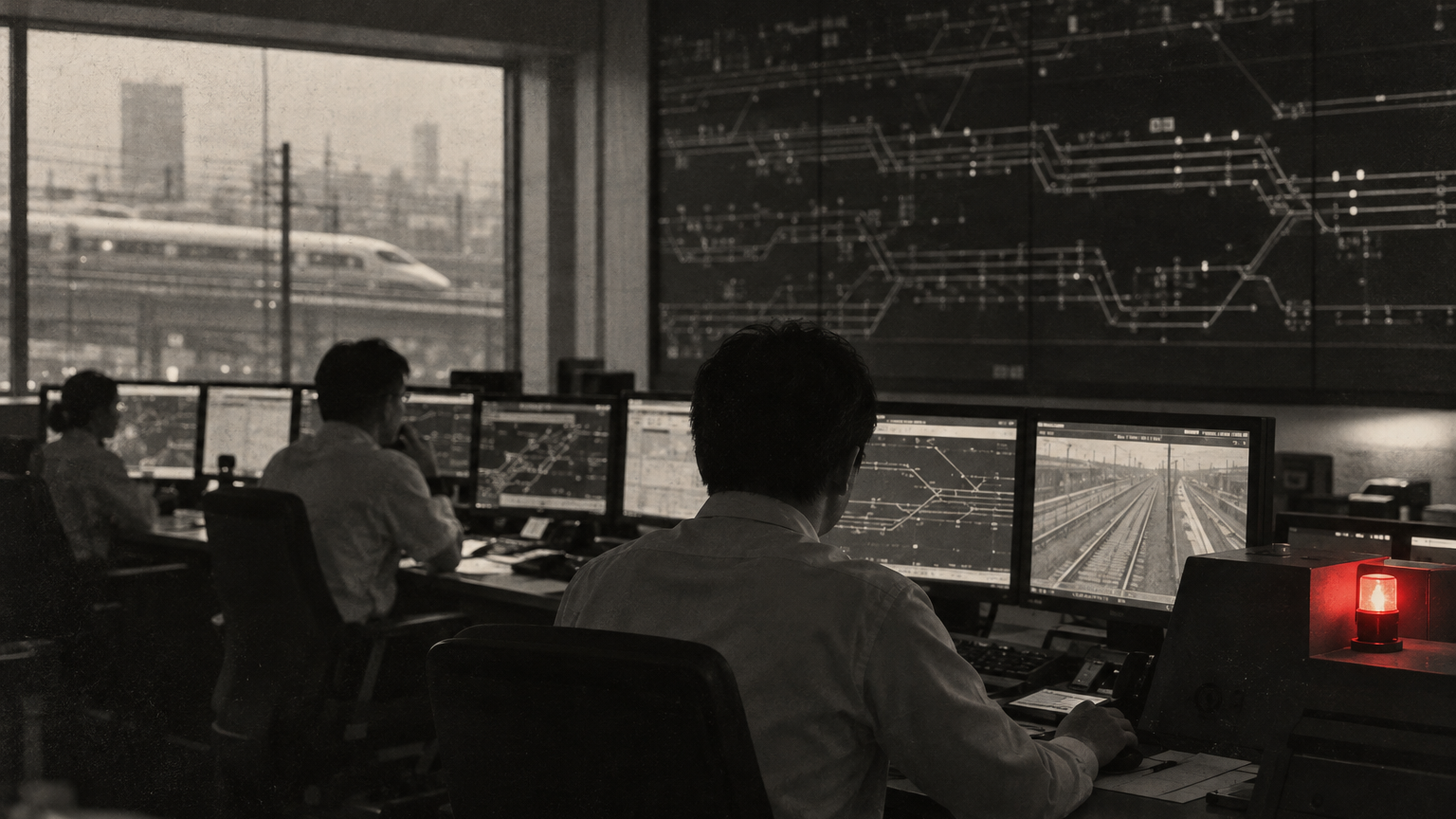
The high-speed train collision near Toledo, central Spain, illustrates how a malfunctioning automated signal system and an 'inexplicable' command from the control center led to tragedy. As faith in automation as a safeguard against human error wavers, we must consider critical questions. How much human intervention should be allowed in system design, and what disasters await when those boundaries are breached?
The incident occurred on the Madrid-Seville line, one of Spain's prominent high-speed rail routes. Around 8:30 a.m., the automated LZB signal system failed over a 63-kilometer stretch, causing trains to stop automatically. The control center then instructed a manual restart. However, the stationary Iryo train did not move, and the following Renfe AVE train, despite the stop signal still being active, was permitted to proceed at speeds up to 200 kilometers per hour, leading to a collision, according to initial investigations.
The core question raised by this accident is the potential danger of human intervention when automated safety systems fail. The LZB system monitors train speed and position in real-time and applies automatic braking in hazardous situations. Yet, when the system failed, the control center switched to manual mode, and the signaling system malfunctioned during the transition. This demonstrates that automation does not guarantee complete safety and that allowing room for human judgment can lead to more severe accidents.
Following the accident, Spain's Minister of Transport clearly stated that the responsibility lay not with the train operators but with the control center's 'inexplicable' command. The decision to allow high-speed travel without adhering to the 'marcha a la vista' procedure, despite the signal system failure, highlights both the failure of technical safeguards and the critical role of human error in the accident.
This incident parallels the Adamuz accident earlier this year, where track damage was the cause. In this case, the signal system's failure and the control center's judgment led to the disaster. Both incidents occurred when the technical safeguards of the high-speed rail system were compromised, suggesting that despite appearances, Spain's high-speed rail network may harbor underlying vulnerabilities in maintenance and system design.
In this context, designing manual transition procedures for system failures becomes a crucial task. Options include integrating automatic support systems to maintain train spacing and speed limits during manual operation or implementing a double-check procedure where trains verify their surroundings in real-time upon receiving control center commands. This represents not just an addition of technology but a redesign of the division of roles between humans and machines.
Of course, these remedies have limitations. Overly complex double-check procedures could delay responses in emergencies, and excessive intervention by automatic support systems might impair driver judgment. Additionally, if maintenance budgets are insufficient or system updates are delayed, the designed safeguards themselves may not function properly, presenting practical constraints.
The most significant lesson from this accident is the realization of how dangerous it is to believe that automated systems can operate perfectly without human intervention. No matter how advanced technology becomes, the moment human judgment intervenes, systems become vulnerable again. Therefore, it is essential to clearly define the 'safety boundaries' where automation and human intervention do not conflict and to prepare in advance for possible responses when those boundaries are breached.
The remaining question is how high-speed rail networks, not only in Spain but worldwide, will redefine the balance between automation and human intervention in light of this tragedy. Acknowledging that safety is achieved not by replacing humans with technology but by having them work together will lead to a true understanding of 'engineered safety.'
This article was produced with the assistance of AI using publicly available sources and has undergone The Gist’s factual and source-verification process. Original sources are listed below. Errors and corrections: corrections@thegist.co.kr
Sources
- S1 — Euronews2026-10-28 · accessed 2026-10-28
- S2 — EL PAÍS English2026-10-28 · accessed 2026-10-28
- S3 — Sur in English2026-10-28 · accessed 2026-10-28
- S4 — EL PAÍS English2026-10-28 · accessed 2026-10-28
- S5 — EL PAÍS2026-01-25 · accessed 2026-10-28
- S6 — ITV News2026-10-28 · accessed 2026-10-28