World
Rising Tensions: Eritrea's Diplomatic Break and the Horn of Africa's Looming Conflict
Eritrea's complete severance of diplomatic relations with Ethiopia in early October 2026 is seen not merely as a diplomatic breakup but as a signal of a potential comprehensive reshaping of the complex power dynamics in the Horn of Africa. Why was this decision made now, in what context, and what impact will it have on regional security moving forward?
Eritrea's decision to cut diplomatic ties is not merely a diplomatic move. On October 1, 2026, after Ethiopia expelled 10 Eritrean diplomats and closed its embassy, Eritrea promptly declared that it would sever all diplomatic relations "in reciprocity." This event highlights that the tensions between the two countries have reached a threshold where they could escalate into military conflict.
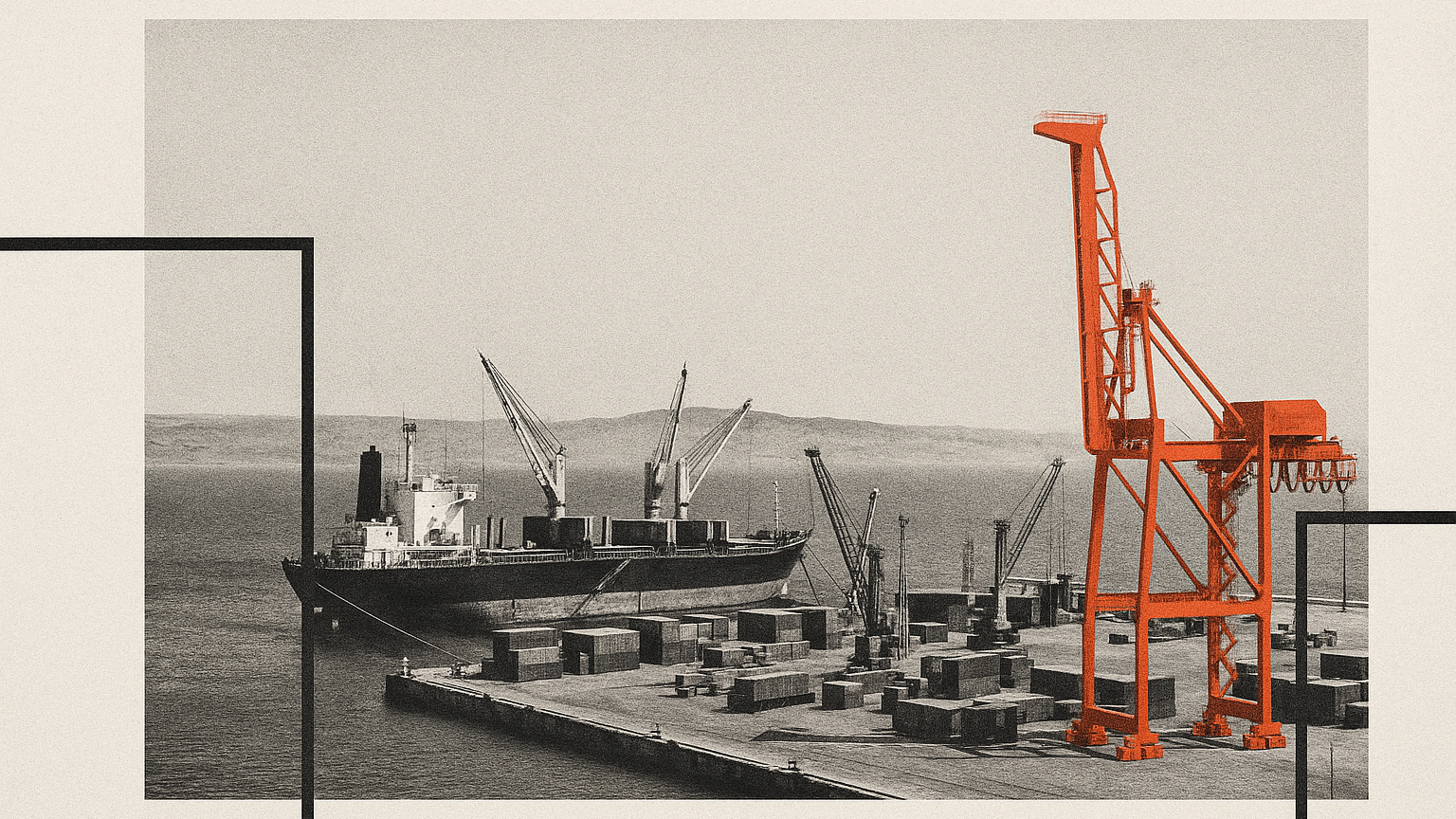
The backdrop to this diplomatic break is Ethiopia's ambition to secure 'maritime access.' As a landlocked country, Ethiopia sees access to ports as essential for economic growth and security, with Eritrea's Assab Port emerging as a strategic focal point. This demand is perceived by Eritrea as an infringement on its sovereignty, further complicating trust-building between the two nations.
Moreover, the political fragmentation in the Tigray region and the involvement of external forces are amplifying tensions. Eritrea's strategic maneuvers linked to the internal divisions within the Tigray People's Liberation Front (TPLF) create a complex structure that could escalate beyond a regional dispute into an interstate confrontation.
The severance of diplomatic relations could be a precursor to war. In September 2026, Ethiopia's top military commander accused Eritrea, Sudan, and Egypt of supporting the Tigray rebels, suggesting that the conflict could spread across the region. This indicates that the diplomatic break is not merely symbolic but a real threat linked to military tensions.
Furthermore, the potential for clashes with the Sudanese civil war and the entangled interests of Gulf countries around the Red Sea are transforming the region into a vast 'conflict convergence' zone. The Eritrea-Ethiopia conflict is no longer a bilateral issue but has evolved into a complex security crisis intersecting with multinational interests.
Nevertheless, the immediate realization of a full-scale war remains limited. Both countries are already grappling with internal conflicts, and a full-scale war could further destabilize their political and economic foundations. While the diplomatic break is threatening, it may also be a strategic move calculated under careful consideration.
In this crisis, what are the conditions for sustainable peace? Historically, Eritrea and Ethiopia have oscillated between 'no war, no peace' states. Experts suggest that institutional interdependence and multilateral guarantees, akin to post-war Franco-German cooperation, could drive peace. This approach goes beyond mere diplomatic restoration, aiming for a long-term strategy to build trust on an institutional basis.
Additionally, the mediation role of external powers and regional organizations is crucial. China, with its investments and military interests in both Ethiopia and Eritrea, is a potential mediator that could contribute to conflict prevention. There is a growing call for the international community to move beyond simple mediation and develop long-term strategies for institutional peacebuilding.
Eritrea's diplomatic break is not merely a declaration of separation but a watershed moment that could reshape the power landscape of the Horn of Africa. This event simultaneously reveals military tensions, diplomatic realignments, and the necessity for long-term peacebuilding. Through this article, readers are encouraged to consider how this diplomatic rupture exposes both the potential for conflict and the conditions for peace within a complex security framework.
This article was produced with the assistance of AI using publicly available sources and has undergone The Gist’s factual and source-verification process. Original sources are listed below. Errors and corrections: corrections@thegist.co.kr
Sources
- S1 — AP News2026-10-01 · accessed 2026-10-02
- S2 — The New Humanitarian2026-02-23 · accessed 2026-10-02
- S3 — Horn International Institute for Strategic Studies2026-09-17 · accessed 2026-10-02
- S4 — Lansing Institute2026-09-17 · accessed 2026-10-02
- S5 — Council on Foreign Relations2026-09-29 · accessed 2026-10-02
- S6 — Horn Review2026-08-13 · accessed 2026-10-02
- S7 — Eritrea Focus2026-05-27 · accessed 2026-10-02
- S8 — Horn International Institute for Strategic Studies2026-01-01 · accessed 2026-10-02
- S9 — International Crisis Group via ecoi.net2025-??-?? · accessed 2026-10-02
- S10 — Le Monde2026-02-26 · accessed 2026-10-02
- S11 — dw.com· accessed 2026-10-02