Great Powers
Is NATO Truly Ready for Its 'Block, Blunt, Break' Strategy?
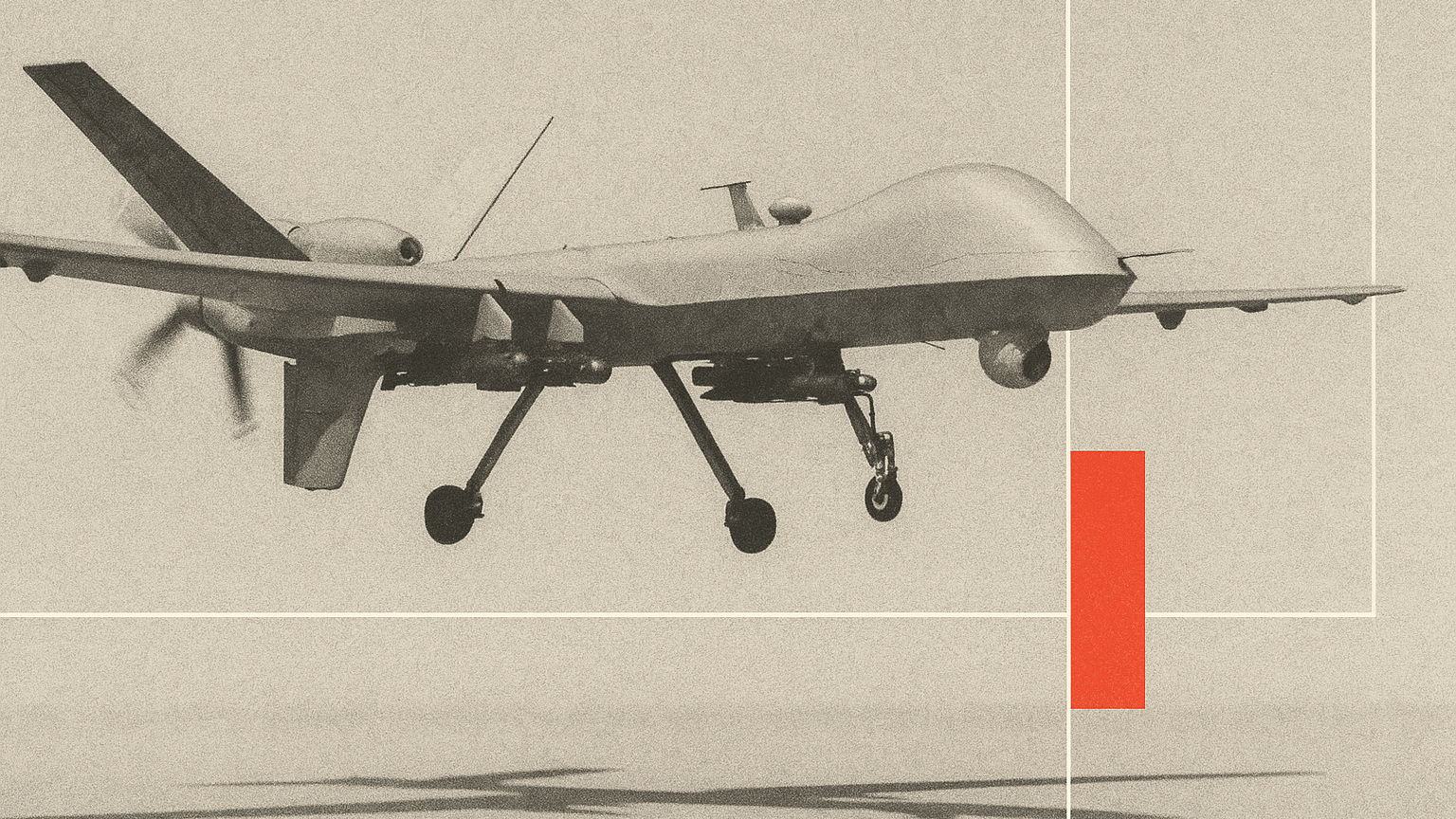
NATO's new strategy against Russia, encapsulated in the phrase 'block, blunt, break,' appears simple yet powerful at first glance. But what does it take for this strategy to work in practice, and can the alliance's current level of preparedness and political cohesion support it? These questions extend beyond mere military tactics to serve as a crucial measure of NATO's future.
At the Warsaw Security Forum, General Alexis Grynkewich, the U.S. European Command's top commander, outlined NATO's 'theory of victory' in three stages: block, blunt, and break. The 'block' stage involves halting enemy advances at the border, 'blunt' focuses on neutralizing attacking forces through air, sea, and ground strikes, and 'break' aims to destroy supply lines and command structures to crush the enemy's will to fight. This strategy emphasizes the 'low-cost, high-volume' deployment of precision weapons, drones, and autonomous systems, drawing lessons from the Ukrainian front and Middle Eastern conflicts.
For this strategy to work in reality, NATO member countries must possess sufficient military capabilities. However, Dr. Igor Istomin from MGIMO University points out that NATO is still unprepared for large-scale warfare. European nations continue to face significant gaps in key weapon systems, such as air defense and long-range strike capabilities. This raises questions about the effectiveness of the 'block' stage in halting enemy advances and the 'blunt' stage in sufficiently neutralizing threats.
Moreover, Russia is enhancing its networked military capabilities, capable of striking deep beyond the front lines, having gained experience in drone and sensor-centric warfare. While NATO strives to regain mobility in this 'transparent battlefield,' Russia is pursuing strategies to rebuild maneuver warfare. This suggests that for NATO to effectively execute the 'break' stage, it must develop countermeasures that surpass Russia's technological advancements.
Strategic readiness is not the only concern; political cohesion is also a critical factor. As highlighted by an Al Jazeera article, NATO shows signs of division, exacerbated by former U.S. President Trump's conciliatory approach to Russia. If the alliance fails to maintain a unified response to external threats, the 'block, blunt, break' strategy could face fractures before implementation.
Additionally, Russia might exploit limited incursions or hybrid tactics to test NATO's unity. The Institute for the Study of War warns that a limited attack on the Baltic states could serve as a means to test NATO's willingness to invoke Article 5. If the alliance does not respond cohesively, NATO's credibility and unity could be severely compromised.
Nevertheless, NATO is moving to strengthen its collective defense capabilities, agreeing to invest 5% of GDP in defense by the 2025 Hague Summit. This demonstrates that the 'block, blunt, break' strategy is not merely a declaration but is linked to actual military enhancement and strategic direction.
Technological innovation is also crucial for the success of this strategy. The 'low-cost, high-volume' deployment of precision weapons, drones, and autonomous systems is a lesson learned from the Ukrainian battlefield, but establishing a framework for NATO to acquire and operate these technologies on a large scale is another challenge. Without securing technological superiority, even if the 'block' stage halts enemy advances, the 'blunt' and 'break' stages may struggle to achieve their objectives.
Ultimately, the 'block, blunt, break' strategy symbolizes the military and political challenges NATO faces. For this strategy to be more than just a slogan, internal cohesion, military enhancement, technological readiness, and strategic consistency must all align. Otherwise, NATO risks remaining in a state of 'theoretical victory.'
This article was produced with the assistance of AI using publicly available sources and has undergone The Gist’s factual and source-verification process. Original sources are listed below. Errors and corrections: corrections@thegist.co.kr
Sources
- S1 — Al Jazeera2026-10-13 · accessed 2026-10-13
- S2 — The Defense Post2026-10-13 · accessed 2026-10-13
- S3 — Russian International Affairs Council2026-07-28 · accessed 2026-10-13
- S4 — NATO Defense College2026-02-05 · accessed 2026-10-13
- S5 — Institute for the Study of War (ISW)2026-09-16 · accessed 2026-10-13
- S6 — NATO Parliamentary Assembly2025-10-12 · accessed 2026-10-13
- S7 — NATO2026-06-25 · accessed 2026-10-13