Politics
Former Kosovo President Thaci Convicted of War Crimes: Justice or a Seed of Division?
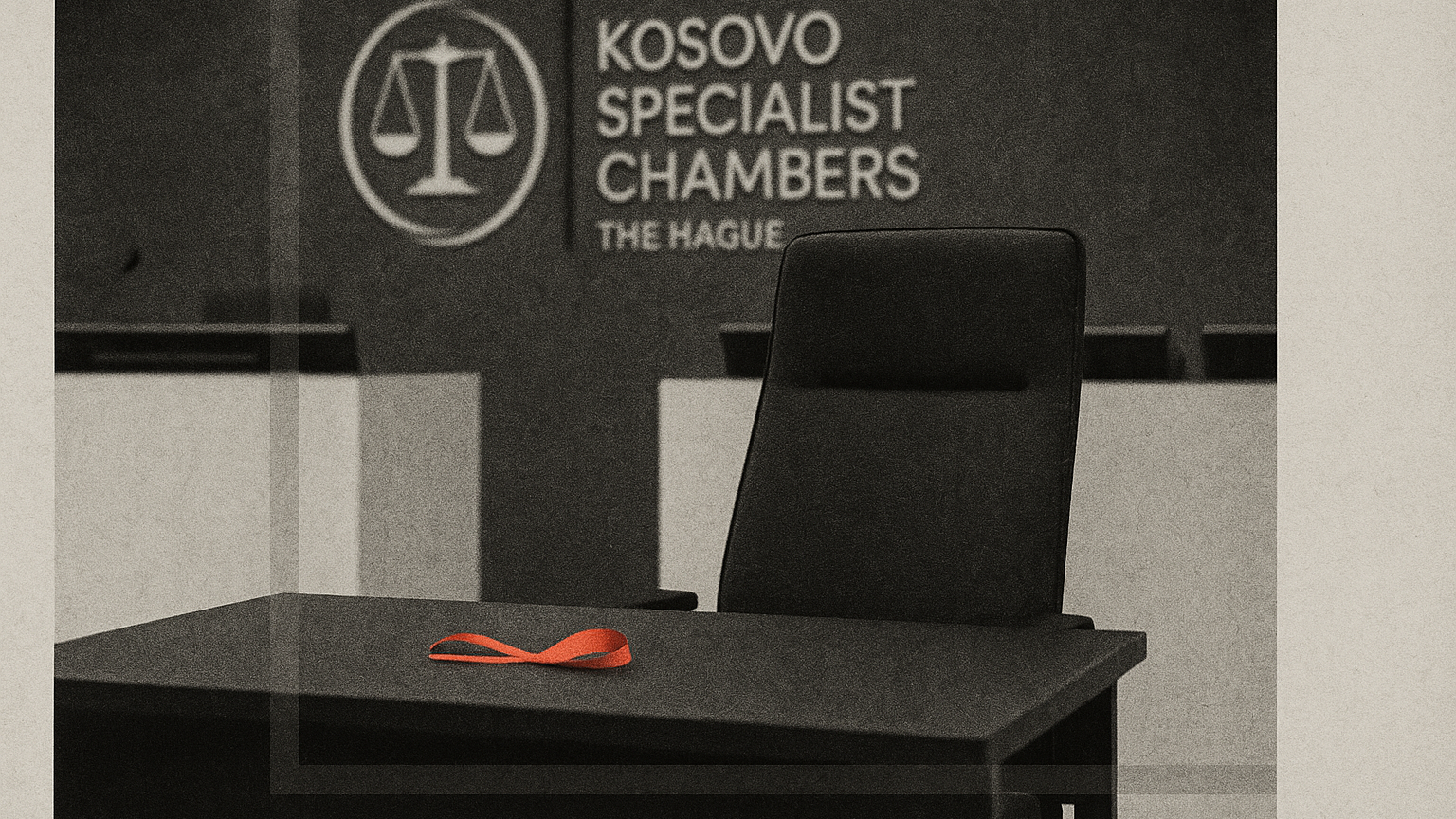
Hashim Thaci, former president of Kosovo and leader of the Liberation Army, was convicted of war crimes and sentenced to 25 years by the Kosovo Specialist Chambers in The Hague on September 16, 2026. This case goes beyond a mere legal verdict, prompting questions about whether a war hero standing trial signifies a triumph of justice or a deepening of social division.
Thaci's conviction for war crimes stems from his role as a member of the Kosovo Liberation Army (KLA) leadership during the 1998-1999 Kosovo War of Independence. He was found guilty of 385 illegal detentions, 303 cases of torture, 49 acts of cruelty, and 96 murders. The court determined that he played a central role in forming and executing a common criminal purpose as a political director, holding him accountable not just as a messenger but as an architect and executor of the criminal system.
The verdict has been hailed as a symbol of justice. Amnesty International praised it for demonstrating that even high-ranking officials are not above the law, offering hope to victims who have awaited justice for decades. It also serves as an example of the international community's ability to effectively hold war criminals accountable.
However, public opinion in Kosovo is divided. Many who view KLA leaders as heroes see the verdict as criminalizing a just war, strongly opposing it. From their perspective, Thaci was a freedom fighter for Kosovo's independence and is perceived as a political victim of external pressures. His party has labeled the verdict as 'unjust political manipulation.'
These reactions highlight the dilemma faced by post-war societies. While bringing a war hero to trial is a step towards justice, it also leaves those who remember him as a hero feeling betrayed and lost. If legal justice is pursued without addressing unresolved social conflicts, it may exacerbate divisions.
Can Legal Justice and Social Reconciliation Coexist?
The impact of this verdict on Kosovo's future is complex. On one hand, it could strengthen the authority of the law and establish a principle of zero tolerance for war crimes. On the other hand, in a society where nationalist identity centered around the KLA remains strong, the verdict risks reigniting political divisions and amplifying internal conflicts. With the appeal process ongoing, tensions are likely to persist until a final decision is reached.
This case raises questions about how justice and reconciliation can be balanced in post-war societies. Legal justice is essential, but it is not sufficient on its own. A genuine reconciliation process that includes healing for victims and social integration must accompany it. Without this, justice could become a spark for further conflict.
Thaci's conviction prompts the question of whether a war hero standing trial marks the completion of justice or the beginning of social division. This question leaves a universal challenge for post-war societies, including Kosovo, to choose a path between justice and reconciliation.
This article was produced with the assistance of AI using publicly available sources and has undergone The Gist’s factual and source-verification process. Original sources are listed below. Errors and corrections: corrections@thegist.co.kr
Sources
- S1 — wplg· accessed 2026-09-16
- S2 — Amnesty International2026-09-16 · accessed 2026-09-16
- S3 — The Guardian2026-09-16 · accessed 2026-09-16