Security
Drone Strikes School, but Shelters Prove Effective
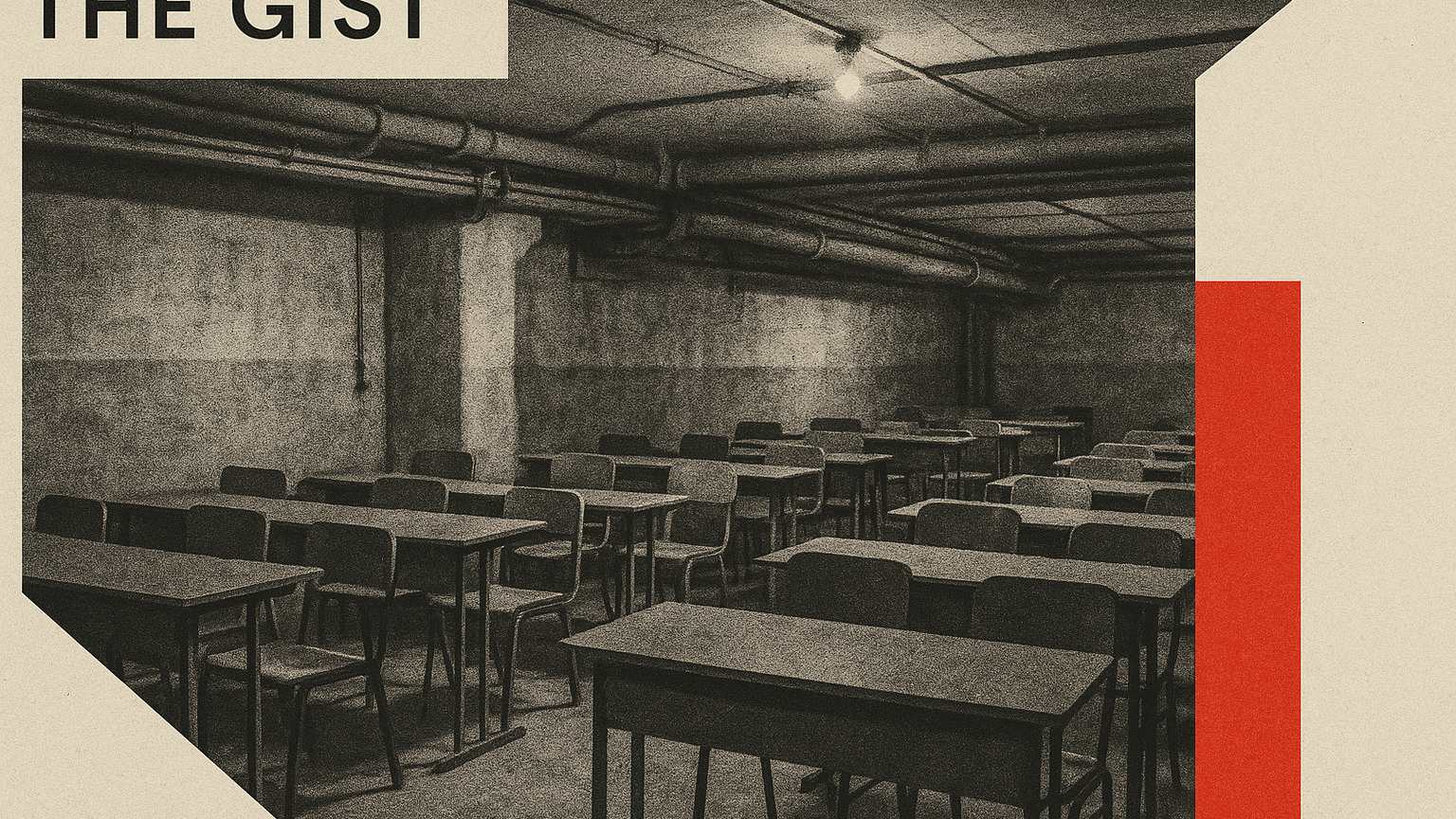
This morning, a Russian UAV struck a school in Kyiv's Solomianskyi district, causing a fire. Fortunately, students and staff were in shelters, and there were no casualties. This incident raises questions about how 'safety systems' operate in educational settings where war has become a daily reality.
The significance of this attack extends beyond the damage to the school building; it underscores how shelters have effectively protected lives. Kyiv Mayor Klitschko stated, “Children and staff were in the shelter, and there were no casualties.” Education Minister Butenko also emphasized that “educational institutions are effectively continuous targets of Russia,” highlighting that shelters are an indispensable choice during air raid alerts.
While the functionality of shelters is encouraging, it also underscores the reality of repeated attacks and the resulting tension that has become routine in educational settings. In late September, schools and research institutions, including those in Solomianskyi, were targeted by drone and missile attacks, resulting in casualties. This indicates that educational spaces are being overtly targeted as strategic and psychological objectives.
Why do these attacks persist? Analysts suggest that Russia employs a strategy aimed at causing institutional and psychological shock simultaneously. Jet-powered drones, which are fast and difficult to intercept, primarily test the effectiveness of air raid alerts and evacuation systems. By targeting schools and research institutions, there is an apparent intent to disrupt 'normalcy' and undermine civilian resolve.
How effective are the shelters? Kyiv has numerous shelters, including subway stations and school basements, but only half are reportedly usable. Since the early days of the war, issues of 'shelter quality' and 'accessibility' have been raised. Some schools lack underground spaces, or their shelters are inadequately maintained, posing risks during actual emergencies.
These limitations are not confined to physical structures. As the Education Minister noted, the need to align educational processes with air raid alerts and shelter operations disrupts educational normalcy. Class times are reduced, psychological stress accumulates, and both teachers and students face the pressure of learning under the constant threat of attack.
Nevertheless, the fact that shelters functioned effectively to prevent casualties offers hope that 'safety systems' can hold meaning even in wartime. This is not just about physical structures but symbolizes the educational community's capacity to respond to crises. It reflects the swift actions of teachers and administrators and the calm evacuation by students.
However, this hope must be sustainable. Future efforts should focus on expanding and maintaining physical shelters and enhancing the psychological resilience of educational settings. Strengthening air raid response infrastructure with international support and establishing trauma response programs for teachers and students are crucial. Additionally, long-term recovery strategies are needed to ensure educational spaces can return to being the center of daily life post-war.
This incident is not merely a drone attack but a question posed by war to educational settings. While shelters worked, the underlying anxiety and structural vulnerabilities remain. Education is not just about imparting knowledge; it is the foundation of community life. When that foundation is shaken, what must we protect? This question will continue to follow us even after the war ends.
This article was produced with the assistance of AI using publicly available sources and has undergone The Gist’s factual and source-verification process. Original sources are listed below. Errors and corrections: corrections@thegist.co.kr
Sources
- S1 — Interfax-Ukraine2026-10-01 · accessed 2026-10-01
- S2 — Interfax-Ukraine2026-10-01 · accessed 2026-10-01
- S3 — The Guardian2026-09-28 · accessed 2026-10-01
- S4 — Le Monde2026-09-03 · accessed 2026-10-01
- S5 — Wikipedia· accessed 2026-10-01