Technology
Can Hubble Be Saved?
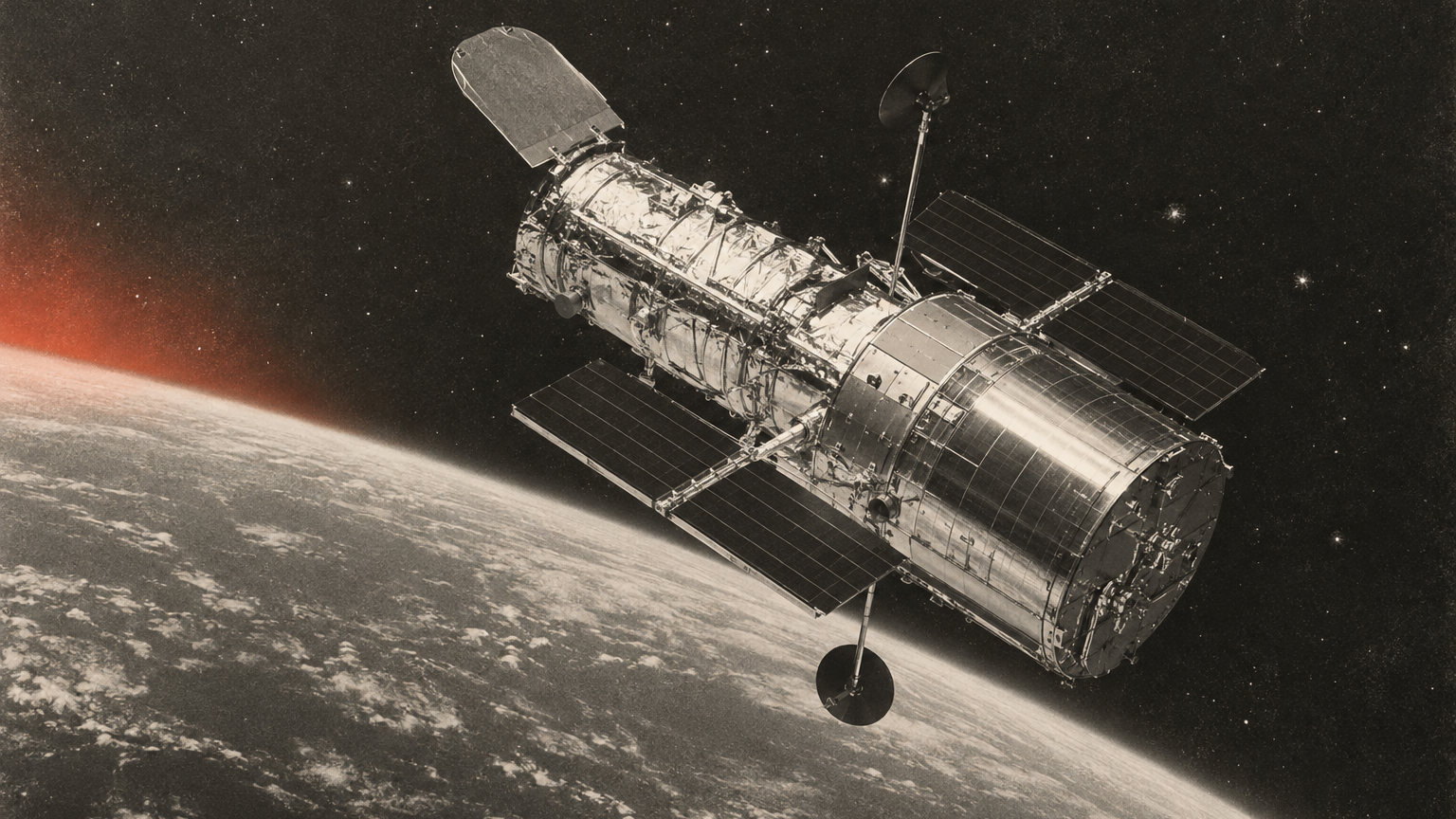
With the Hubble Space Telescope facing a potential descent into Earth's atmosphere in the early 2030s, NASA's recent Request for Information (RFI) to commercial entities for ideas on reboosting, enhancing, or safely deorbiting Hubble signifies more than a mere technical solicitation. This initiative could herald a shift in public-private collaboration on space assets, the maturity of commercial space services, and the future direction of space policy.
In late October 2026, NASA issued an RFI seeking proposals from commercial entities to reboost, enhance, or safely deorbit the Hubble Space Telescope by 2032. This request goes beyond seeking technical solutions; it appears to be the starting point for a new paradigm in space asset management. The questions naturally arise: Why now, and why involve commercial entities?
A New Era: Private Sector to the Rescue of Space Telescopes
Since NASA last reboosted Hubble's orbit in 2002, it has been unable to provide further propulsion, especially after the shuttle program ended in 2011. This RFI aims to fill that gap with commercial capabilities, signaling the maturity of commercial space services. Companies like Northrop Grumman, Astroscale, and Starfish Space are already conducting experiments in satellite servicing and refueling.
The fact that commercial entities are now capable of sending actual hardware into orbit and attempting on-orbit servicing and refueling demonstrates that the era where private companies can extend the lifespan or deorbit space assets has arrived. This marks a potential turning point in space policy.
Preserving Hubble: Scientific Responsibility or Political Symbol?
Hubble is more than just a telescope; it is a symbol of space science and a cultural icon beloved by the public. In the RFI, NASA emphasized "responsibility to the American taxpayer and the scientific community," highlighting that extending Hubble's mission holds political and social significance beyond scientific gain. This underscores the connection between space science and public sentiment, beyond technical and budgetary considerations.
In this context, efforts to preserve Hubble are both a responsibility to protect scientific heritage and a political message to reinforce the legitimacy of space policy to the public. Hubble once again illustrates that science and politics are inseparable.
Managing Technical Limits and Risks
Hubble lacks its own propulsion system, and its orbit is gradually decaying. The RFI proposes reboosting it above 600 km, enhancing its performance, or safely deorbiting it, but these tasks involve numerous technical risks, including orbital approach, docking, propulsion provision, and system integration. Past attempts, like the Swift mission, where a commercial vehicle approached within 10 km but couldn't proceed due to system issues, highlight these challenges.
Thus, the RFI is not only about exploring technical possibilities but also about assessing risk management and technological maturity. NASA is asking respondents for technology readiness, risk assessment, mitigation strategies, timelines, and costs. This is a preliminary step to gauge feasible plans, not just a call for ideas.
Hubble's Role Amid Future Space Telescopes
While successors like the James Webb and Roman telescopes exist, they specialize in infrared observation and cannot fully replace Hubble's capabilities in visible and ultraviolet light. NASA plans the 'Habitable Worlds Observatory' for the 2040s to fill this gap. Extending Hubble's mission could serve as a crucial scientific link during this interim period.
In this light, extending Hubble is not merely about preserving a legacy but is a strategic choice to ensure continuity with future scientific missions.
NASA's RFI signals a new era in space asset management. This initiative, intertwined with the maturity of commercial technology, the value of scientific heritage, technical risks, and connections to future missions, could redefine space policy and the future of science beyond merely preserving Hubble. The responses due by November 30 will reveal the visions and feasibility of these plans, and NASA's subsequent decisions will chart the course. We must pay attention to how this iconic space asset will open its next chapter.
This article was produced with the assistance of AI using publicly available sources and has undergone The Gist’s factual and source-verification process. Original sources are listed below. Errors and corrections: corrections@thegist.co.kr
Sources
- S1 — Ars Technica2026-10-31 · accessed 2026-11-02
- S2 — NASA Science2026-10-30 · accessed 2026-11-02
- S3 — Starlust2026-10-? · accessed 2026-11-02