World
Antarctic Ice Melt: A Harbinger of Greater Sea Level Rise?
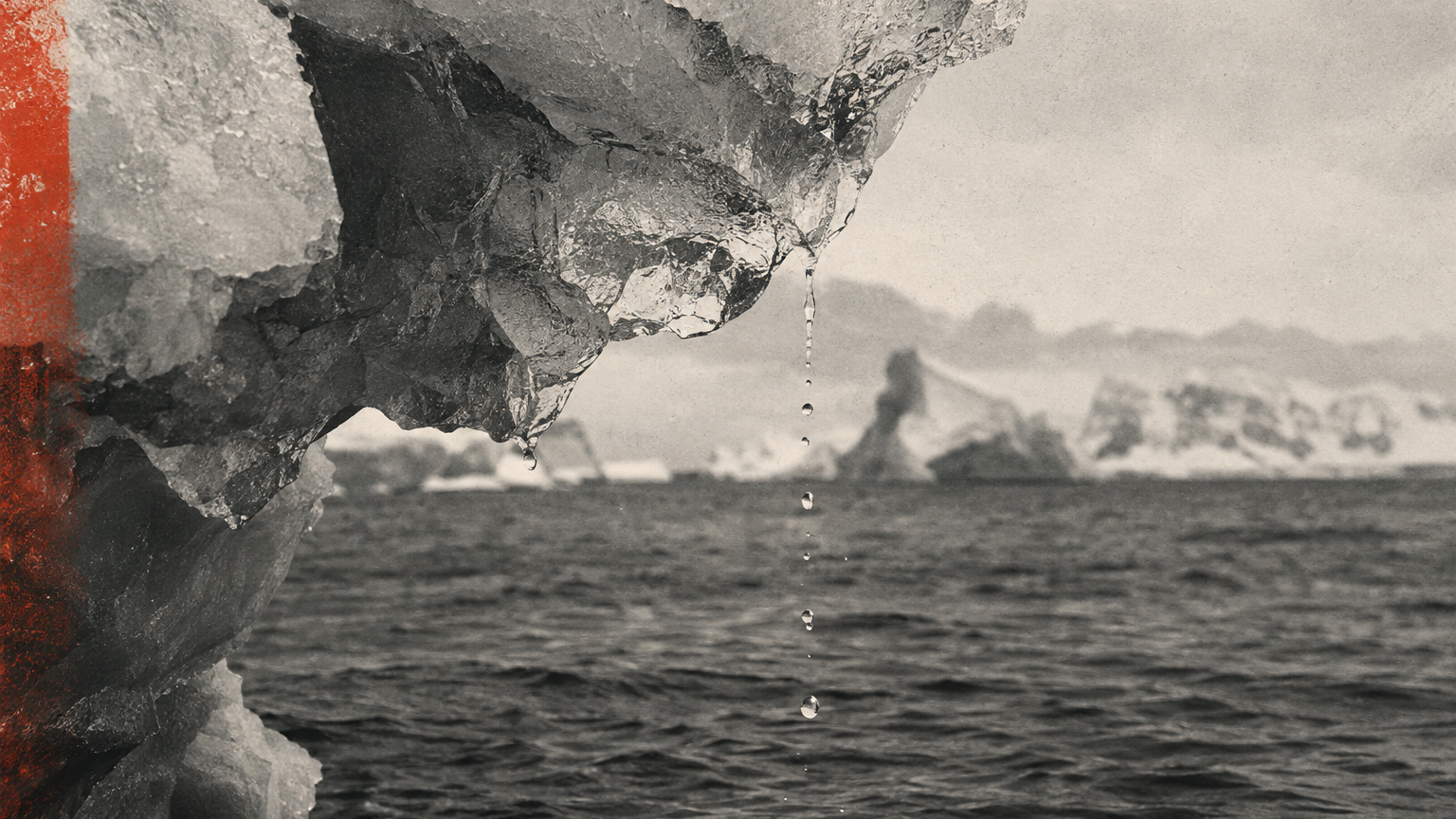
TRT World recently cited a study warning that Antarctic ice melt could raise sea levels by over 0.9 meters by 2100, nearly doubling previous predictions. This warning carries significant implications. Why is Antarctic ice melting faster than expected? What uncertainties and response strategies have we overlooked? These questions deepen the scientific and policy discussions surrounding sea level rise.
The study cited by TRT World, authored by American geologists Robert DeConto and David Pollard and published in Nature, warns that Antarctic ice alone could raise sea levels by over 0.9 meters by 2100. This level of increase matches the '3 feet' prediction made by the UN Intergovernmental Panel on Climate Change (IPCC) in 2013. It suggests that Antarctic melting has the potential to exceed previous forecasts. The study emphasizes the severity of the disaster facing low-lying cities and reiterates the need for greenhouse gas reduction.
To understand why this warning is particularly alarming, we need to examine the mechanisms and uncertainties of Antarctic ice melt. A recent study in Nature Geoscience analyzed that the mass loss of Antarctic ice is almost certain to continue through the end of the 21st century, potentially causing up to 25.4 centimeters of sea level rise by 2100 under high emission scenarios. These figures, derived from Bayesian correction models based on satellite observations, show that Antarctic melting is a realistic threat beyond mere prediction.
However, the response of Antarctic ice is not uniform. Some studies indicate that in recent years, Antarctic ice mass loss has slowed or even increased. For instance, a study published in 2026 reported that the increase in 'Atmospheric Rivers' and winter sea ice expansion led to an increase in ice mass in some Antarctic regions after 2020. This suggests that melting is not always accelerating and that temporary reversals are possible within the complex interactions of the climate system.
The coexistence of these opposing trends is due to various feedbacks and uncertainties affecting Antarctic ice melt. For example, the Wilkes Subglacial Basin in East Antarctica has the potential to raise sea levels by several meters and has experienced repeated melting during past warm periods. This indicates that melting is not merely a result of climate change but a complex phenomenon involving geographic vulnerabilities and ocean-ice interactions.
Furthermore, recent research offers a new perspective on the predictability of Antarctic ice melt. According to a paper in Nature, the current rate of ice mass loss (as of 2025) could serve as a strong indicator for predicting sea level rise rates over the coming decades. This suggests that current observations play a crucial role in forming short-term response strategies. However, in the long term, the predictability could sharply decline due to ocean-based instability feedbacks.
These scientific discussions extend beyond numerical differences, offering profound implications for policy and societal responses. If sea level rise exceeds previous predictions, infrastructure, housing, ecosystems, and economic stability in coastal cities could all be threatened. Thus, short-term adaptation strategies based on current observational data are necessary, while long-term investments in reducing greenhouse gas emissions and researching Antarctic ice uncertainties are essential.
Ultimately, the warning that Antarctic ice melt could progress faster than expected poses two critical questions. First, how can we enhance our current observational and modeling capabilities? Second, in a situation where uncertainty is significant and delay is not an option, how should we design policies and societal preparations? These questions highlight the collaborative challenges that science, policy, and communities must address in the face of rising sea levels.
This article was produced with the assistance of AI using publicly available sources and has undergone The Gist’s factual and source-verification process. Original sources are listed below. Errors and corrections: corrections@thegist.co.kr
Sources
- S1 — www.trtworld.com· accessed 2026-11-13
- S2 — TRT World· accessed 2026-11-13
- S3 — Nature Geoscience2026-09-30 · accessed 2026-11-13
- S4 — Communications Earth & Environment2026-02-03 · accessed 2026-11-13
- S5 — Nature2026-06-17 · accessed 2026-11-13
- S6 — Nature Reviews Earth & Environment2026-09-30 · accessed 2026-11-13