Great Powers
A New 'Yalta' or Diplomatic Theater? The Implications of the Trump-Putin-Xi Meeting
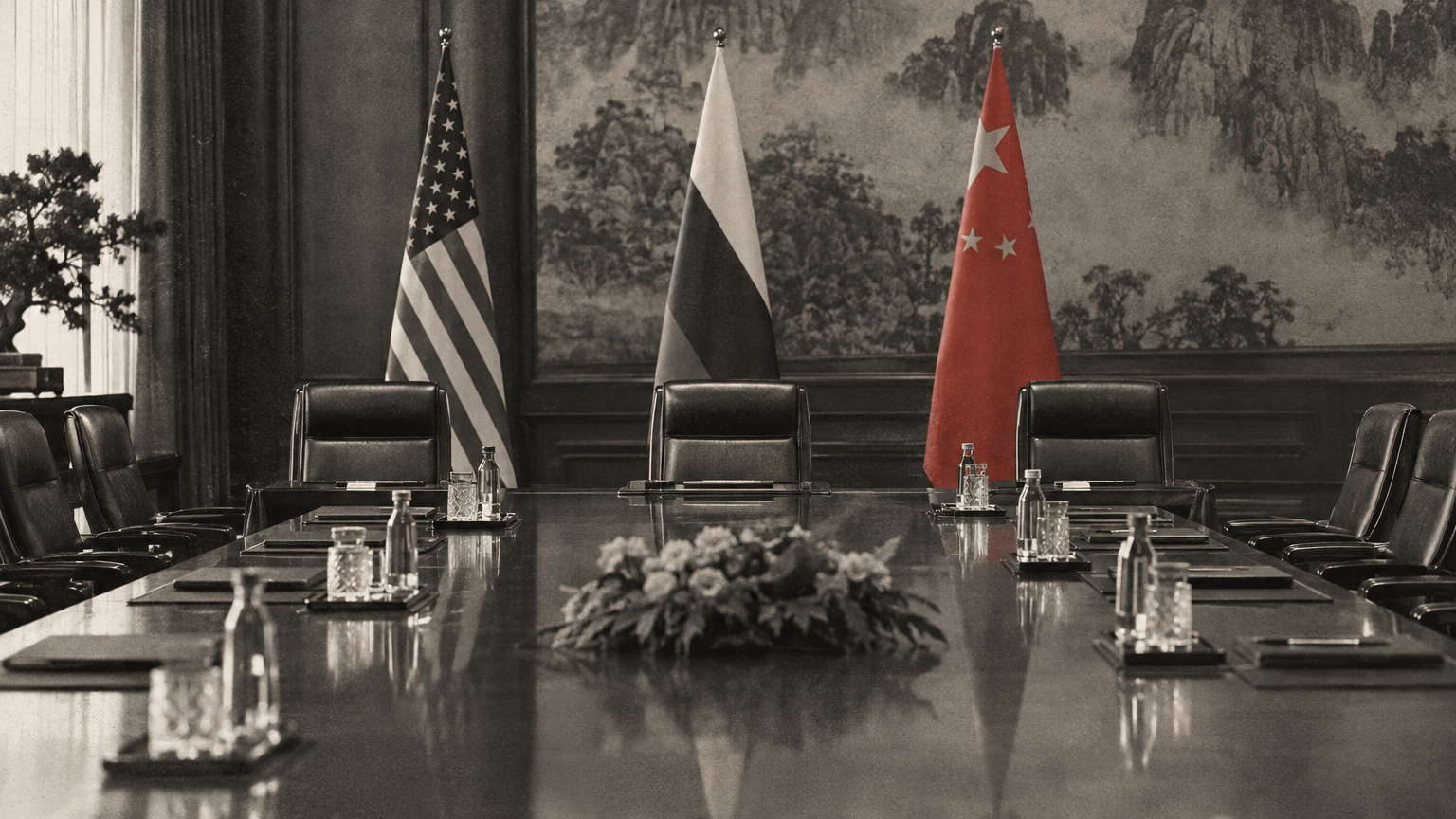
The announcement of the first-ever trilateral meeting between US President Donald Trump, Russian President Vladimir Putin, and Chinese President Xi Jinping at the APEC summit carries significant weight beyond mere diplomatic scheduling. It raises questions about whether this meeting can achieve genuine progress in nuclear disarmament or international conflict resolution, or if it will merely serve as a symbolic gesture akin to a '21st-century Yalta.'
The White House has officially announced that President Trump will hold the first-ever trilateral meeting with President Xi Jinping and President Putin in Shenzhen, China, during the APEC summit. Trump plans to discuss nuclear disarmament and the Iran conflict, though the Ukraine war will be handled separately. Additionally, the sensitive issue of semiconductor export controls will not be addressed in this meeting.
Many analysts believe the likelihood of this meeting achieving real diplomatic success is low. Experts from the Brookings Institution suggest that the meeting might only serve as a symbolic scene reminiscent of the 'Yalta Conference,' with a photograph being more significant than any substantial agreement. There are also concerns that addressing the Ukraine issue without European countries could send negative signals to the international community.
Reuters reports that the agenda and format of the meeting have not yet been finalized. Putin may use this as an opportunity to end the Ukraine war on his terms, while Xi might aim to maintain his prestige as the host nation without taking responsibility for uncertain outcomes.
The Weight of Symbolism, the Poverty of Substance
The meeting carries significant diplomatic symbolism, evoking the term '21st-century Yalta' due to its historical resonance with post-war world order discussions. However, Brookings believes that achieving substantial agreements beyond photo opportunities will be challenging. Putin may have intentions to conclude the Ukraine conflict favorably, while Xi might seek to preserve his image as host without bearing the burden of results.
Al Jazeera reports China's stance that participating in trilateral nuclear disarmament talks is 'neither fair, reasonable, nor realistic,' reflecting China's lag behind the US and Russia in nuclear arsenals. This suggests that engaging in disarmament talks could be disadvantageous for China.
CSIS sees the trilateral disarmament dialogue as an opportunity to pressure China and Russia for transparency, but warns that excluding allies like the UK and France could provoke international backlash. The term 'disarmament' itself might inflate expectations excessively.
A Stage of Diverging Interests
Each leader's interests are distinctly different. For Putin, it could be a chance to end the Ukraine war on his terms. For Xi, it provides a platform to reinforce China's central role on the global stage. For Trump, it's an opportunity to discuss nuclear disarmament and the Iran issue, showcasing diplomatic influence, though structural limitations make tangible outcomes challenging amid weakened congressional support.
Le Monde reports that the US has proposed discussing European security architecture with Russia in Abu Dhabi, suggesting that the Trump administration's easing of pressure on Russia might raise Putin's expectations for reshaping Europe's security framework. This indicates that the trilateral meeting could impact European security beyond the Ukraine issue.
Another analysis from Le Monde highlights that Xi aims to position himself as an equal to the US and Russia through this meeting, while Trump sees it as a chance to reciprocate the grand welcome he received in Washington. This underscores the importance of diplomatic gestures over substantive negotiations.
Lingering Questions and the Landscape Beyond
The questions that remain after the meeting are clear. Will this encounter bring about real changes in the international order, or will it remain a performance by powerful leaders? If key issues like Ukraine, European security, nuclear disarmament, and the Iran conflict remain unresolved, the meeting may be criticized as mere diplomatic theater. However, even a joint declaration or principled agreement could hold diplomatic significance.
All eyes now turn to Shenzhen. The messages conveyed by the meeting and their impact on the international community will soon be evident. It will then be possible to judge whether this meeting marks a turning point in diplomacy or remains a showcase of power.
This article was produced with the assistance of AI using publicly available sources and has undergone The Gist’s factual and source-verification process. Original sources are listed below. Errors and corrections: corrections@thegist.co.kr
Sources
- S1 — CBS News2026-11-14 · accessed 2026-11-14
- S2 — Brookings Institution2026-11-12 · accessed 2026-11-14
- S3 — Reuters2026-11-14 · accessed 2026-11-14
- S4 — Al Jazeera2026-11-14 · accessed 2026-11-14
- S5 — CSIS2026-11-09 · accessed 2026-11-14
- S6 — Le Monde2026-11-14 · accessed 2026-11-14
- S7 — Le Monde2026-11-12 · accessed 2026-11-14